
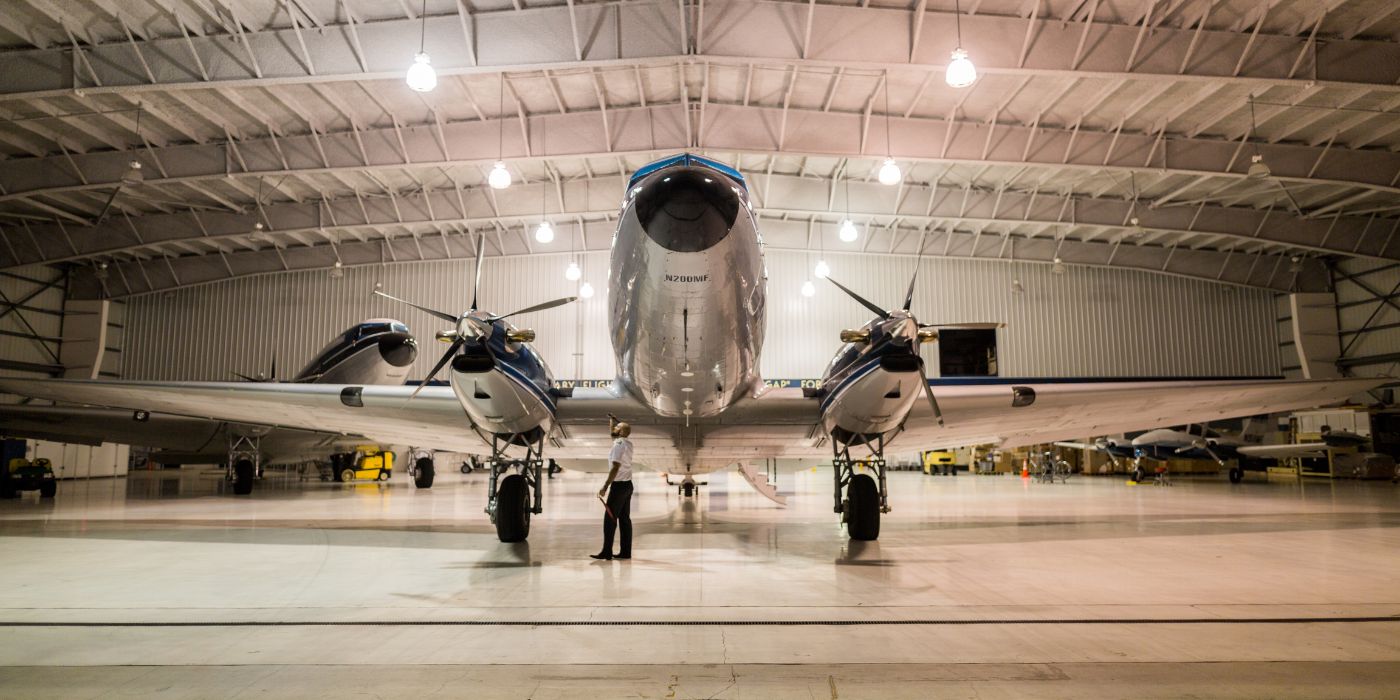
An aircraft hangar floor coating has to survive conditions that would ruin an ordinary slab in a single season. Jet fuel drips, hydraulic fluid, tow tractor tires, dropped tools, and the weight of an aircraft parked on the same spot day after day. Bare or painted concrete gives out fast under that kind of use, and once it starts pitting, dusting, and staining, the problem only spreads across the floor.
We are Allied Coatings, and we have been coating industrial and commercial floors across Southern California for more than 25 years. Our commercial epoxy flooring systems are engineered for exactly these environments: hangars, maintenance bays, and aviation facilities that need a floor built to work as hard as the operation on top of it. If your hangar floor is already failing, we can assess whether it needs a full coating system or a targeted repair before you spend anything.
Why Hangar Floors Fail Faster Than Standard Concrete
Concrete looks tough, but its surface is porous, and that porosity is the whole problem in a hangar. Here is how a standard slab breaks down under aviation use:
- Fluids soak in and stain permanently. Jet fuel, solvents, and hydraulic oils penetrate the open pores of bare concrete, leaving stains that will not clean out and slowly breaking down the surface from within.
- Point loads spall the surface. Constant pressure from jacks, lifts, and landing gear parked on the same spots causes the top layer to spall and flake.
- Damage spreads once the surface breaks. With the surface compromised, contaminants reach deeper into the slab, dusting increases, and cleanup turns into a daily fight.
- Dust becomes foreign object debris. Loose concrete dust is more than a nuisance in a hangar. It becomes FOD that can find its way into intakes and moving parts, which is a genuine safety and maintenance concern.
What a Proper Hangar Floor Coating Needs to Do
A hangar coating is not a paint job. It is a bonded system that changes how the concrete behaves. The professional epoxy systems we install create a seamless, nonporous surface that keeps fuel and fluids on top, where they can be wiped up instead of absorbed.
Fuel, Oil, and Chemical Resistance
Our epoxy floor systems resist the oils, solvents, and corrosive fluids that are unavoidable around aircraft. Because the coating is nonporous, spilled Jet A, hydraulic fluid, or degreaser sits on the surface rather than penetrating the slab. That protects the concrete underneath and makes routine cleanup faster and less damaging over the life of the floor.
Seamless Surfaces That Control Dust
A monolithic surface with no joints or seams gives contaminants nowhere to collect and stops the concrete dusting that creates FOD. That supports cleaner operations, easier sanitation, and lower long term maintenance in a space where debris control matters.
Slip Resistance Where You Need It
We build slip resistance directly into the finish using aluminum oxide, polymer grit, or a decorative flake broadcast. We tune the traction to the space, from a subtle texture across open floor to a more aggressive profile near wash areas, entrances, and any zone that sees moisture.
Coating Options for Aviation Facilities
Not every part of a hangar has the same job, and the coating should reflect that. Solid color epoxy systems give maintenance and storage areas a hard, chemical resistant surface that cleans easily and reflects light well, which brightens the space and makes dropped hardware easier to spot. For facilities that want a more finished look in office areas, entrances, or customer facing spaces, decorative flake and metallic finishes add visual appeal while keeping the same durable base.
Light reflectivity is worth calling out on its own. A bright epoxy floor improves visibility across a large open hangar, which supports both safety and lighting efficiency in a space that is expensive to illuminate.
Our Installation Process
Surface preparation is where most floor coatings succeed or fail, so it is where we start. We begin with a full evaluation of the slab, then profile the concrete using diamond grinding or shot blasting to open the pores for a strong mechanical bond. We address cracks, spalled areas, and old coatings before anything new goes down, and we run moisture testing to confirm the slab is ready, since trapped vapor is a leading cause of coating failure.
From there the system goes on in layers: a primer, base coats for color and coverage, decorative elements where specified, and protective topcoats for chemical and abrasion resistance. Commercial installations typically run 3 to 7 days depending on square footage and slab condition, with most epoxy systems reaching full cure within about seven days. We often use polyaspartic and polyurethane topcoats over an epoxy base when you need a faster return to service or added UV stability.
Durability and What to Expect Long Term
A professionally installed commercial epoxy floor commonly lasts 10 to 20 years, and often longer in areas with lighter traffic. Commercial thickness systems can run past 60 mils, well above the 10 to 20 mils typical of a residential garage, which is part of why they handle equipment traffic and heavy point loads without breaking down.
When a high traffic zone eventually shows wear, recoating usually means light preparation and a fresh topcoat rather than tearing out the floor. Maintenance in the meantime is simple: sweep or dust mop to remove grit, damp mop with a mild cleaner, and wipe up spills promptly. That low upkeep is a large part of the long term value for a facility that cannot afford downtime.
Built for Southern California Aviation Facilities
We serve hangars, maintenance operations, and aviation facilities throughout Orange County, San Diego County, Los Angeles County, and the surrounding region. That regional experience matters, because Southern California’s coastal humidity and heat can affect curing and require adjusted techniques and moisture mitigation. Working with installers who account for those conditions is the difference between a floor that lasts two decades and one that delaminates in two years.
If your hangar needs a floor coating built for real operating conditions, our commercial team can spec the right system for your space. Call (800) 630-2375, request a free estimate, or reach out through our contact page to get a specific plan for your facility. You can also visit us at 795 North Ave. #D, Vista, CA 92083, or email sales@alliedcoatings.com.
FAQs
How long does a hangar floor coating take to install?
Most commercial hangar coatings take 3 to 7 days, depending on square footage and slab condition. Surface preparation usually takes 1 to 2 days, followed by coating application and curing. Traffic and equipment need to stay off the floor during the cure period.
Will epoxy hold up to jet fuel and hydraulic fluid?
Yes. Our epoxy systems form a nonporous surface that keeps fuel, oils, and hydraulic fluid on top of the coating rather than letting them soak into the concrete. That protects the slab and makes spills far easier to clean.
Does an epoxy coating help control concrete dust and FOD?
Yes. A seamless epoxy surface seals the concrete so it stops shedding the fine dust that becomes foreign object debris. That is one of the main reasons aviation facilities coat their floors rather than leaving bare concrete.
How thick is a hangar floor coating compared to a garage floor?
Commercial and industrial systems can exceed 60 mils, while a typical residential garage runs 10 to 20 mils. The added thickness is what allows hangar floors to handle heavy point loads and equipment traffic without breaking down.
Can the floor be made slip resistant near wash areas?
Yes. We add traction using aluminum oxide, polymer grit, or a decorative flake broadcast, and we adjust the texture based on how much moisture the area sees. Wash zones and entrances can get a more aggressive profile than dry storage areas.