
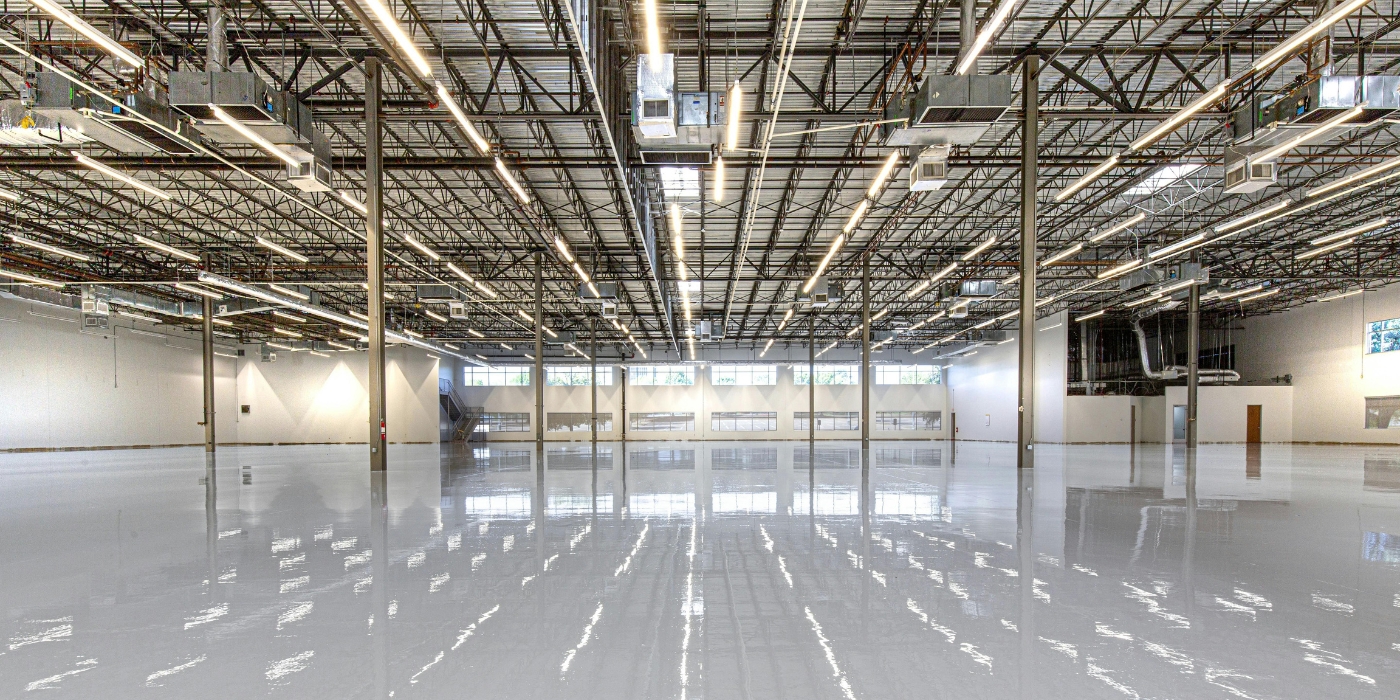
Commercial epoxy flooring in San Diego has one job that bare concrete and paint cannot do: hold up under forklifts, daily washdowns, dropped tools, chemical spills, and the salt air that drifts inland from the coast. Concrete looks tough, but it is porous, which means it absorbs moisture, stains permanently, and dusts under traffic. Once a slab starts breaking down, the repairs rarely stop.
A properly installed epoxy system changes that math. It bonds to the concrete at a molecular level and turns a vulnerable slab into a hard, chemical-resistant surface that cleans fast and lasts for years. Allied Coatings has installed commercial epoxy floor coatings across San Diego County for more than 25 years, and the gap between a floor that lasts two decades and one that peels in two years almost always comes down to what happens before the first coat goes down.
Why Commercial Floors in San Diego Wear Out Faster
San Diego’s climate is easy on people and hard on concrete. Coastal facilities sit in salt-laden air, and chloride from that air works its way into concrete pores, where it corrodes embedded steel and cracks slabs from the inside. Inland sites in areas like Miramar, Kearny Mesa, and El Cajon deal with heat cycling that expands and contracts the slab until fine cracks appear.
Then there is the wear businesses create themselves. Warehouses run pallet jacks and lift trucks over the same lanes all day. Commercial kitchens get hosed down and hit with grease and cleaning agents. Auto shops drip oil, brake fluid, and solvents. Bare concrete absorbs all of it, and a stained, dusting, cracked floor becomes both a liability and a daily cleaning headache.
What Commercial Epoxy Flooring Actually Is
Epoxy is a two-part coating. A resin and a hardener are mixed on site, and they react chemically to form a rigid, plastic-like surface bonded directly to the concrete. That chemical bond is what separates real epoxy from “epoxy paint,” a single-component product that sits on top of the slab and wears off quickly.
Thickness is where commercial work parts ways with residential. Most home garages get a film around 10 to 20 mils, while commercial and industrial floors are usually built at 60 mils or more. That added thickness, paired with the right topcoat, is what lets a floor carry forklift and pallet jack traffic without cracking or telegraphing every flaw beneath it. By contrast, the lighter systems used in residential garages are not engineered for that kind of load.
Many commercial systems finish with a polyurethane or polyaspartic topcoat over the epoxy base. These topcoats add ultraviolet stability, extra chemical resistance, and faster cure times, which matters when a business cannot afford to stay closed for long.
Which San Diego Businesses Get the Most From Epoxy
Epoxy is not the right answer for every floor, but several kinds of operations get an outsized return. Warehouses and manufacturing plants benefit most from the impact resistance, since the coating distributes weight and absorbs the constant pounding of equipment that would otherwise crack and dust a bare slab.
Retail spaces and showrooms use epoxy for a different reason. Metallic finishes, decorative flake, and custom color blends create a floor that reinforces a brand while still standing up to steady foot traffic. Restaurants and commercial kitchens rely on systems rated for food service that resist grease and cleaning chemicals, hold a higher-traction texture, and survive repeated washdowns, which also helps with health inspections.
Medical offices, clinics, and labs choose epoxy because the cured surface is nonporous and has no grout lines or joints where bacteria collect, so it sanitizes easily and tolerates aggressive disinfectants. Even standard offices and commercial buildings get value from the clean look, the low maintenance, and the way the floor shrugs off rolling chairs and daily wear.
Surface Preparation Decides Whether the Floor Lasts
The most expensive epoxy in the world will fail on a badly prepared slab. Preparation is the part customers never see and the part that determines everything else.
It starts with profiling the concrete. Allied Coatings uses diamond grinding and shot blasting to open the surface pores so the epoxy can grip mechanically rather than sit on a smooth, sealed top. Existing coatings, oils, and curing compounds have to come off completely, because epoxy will not bond through them.
Then there is moisture, the quiet killer of commercial floors. Concrete that releases too much water vapor will push a coating off the slab from below, causing blisters and delamination months after the job looks finished. That is why moisture and vapor testing is done before any coating goes down, and why San Diego’s coastal humidity sometimes calls for a vapor-mitigating primer.
Cracks and spalled areas are repaired first. For structural cracks, epoxy injection restores the concrete’s strength before the coating is applied, so the new floor is not bridging a moving joint. This is also why store-bought kits disappoint: they skip real profiling, ignore moisture testing, and use thinner resins, which is why so many do-it-yourself floors peel within a year.
Slip Resistance, Chemical Defense, and Staying Compliant
A glossy floor can be slippery when wet, which is a genuine concern in kitchens, entryways, and wash bays. Slip resistance is tuned during installation, not added afterward. Broadcasting aluminum oxide, quartz, or polymer grit into the coating raises the coefficient of friction, and the texture can be set anywhere from a light grip to an aggressive non-slip surface depending on the room.
Chemical resistance is the other half of the value. Because cured epoxy is nonporous, oils, solvents, and corrosive liquids sit on the surface instead of soaking in, which keeps cleanup quick and protects the concrete underneath. Research on epoxy-based coatings shows they sharply reduce water absorption and chemical diffusion into the substrate.
There is also a regulatory side San Diego businesses should not overlook. Floor and maintenance coatings here fall under the San Diego County Air Pollution Control District’s Rule 67.0.1, which follows the California Air Resources Board’s Suggested Control Measure for architectural coatings.
Industrial maintenance coatings carry their own limits and must be labeled for professional use. Epoxy systems with low or zero VOC content meet these rules, so a compliant floor and a healthy indoor space are not at odds.
Cost, Downtime, and How Long It Lasts
With proper installation and maintenance, a commercial epoxy floor generally lasts 10 to 20 years, and many last longer. When it eventually wears, recoating usually means light surface prep and a fresh topcoat rather than tearing the floor out, which protects the original investment.
Pricing depends on square footage, the condition of the existing slab, the coating system, and how much customization you want. A single-color industrial floor costs less than a metallic showroom finish, and heavily damaged concrete that needs extensive repair will raise the figure. Allied Coatings provides itemized estimates so the cost is clear before any work begins.
Downtime is the other real cost for an operating business. Most commercial installations run about 3 to 7 days, with one to two days for prep and the rest for coating and curing. Work can often be staged section by section or scheduled around nights and weekends, so the floor comes back online without shutting the whole facility down.
Get a Commercial Floor Built for San Diego Conditions
A commercial floor is infrastructure, not decoration, and the cheapest bid is rarely the one that lasts. The systems that survive a decade or more are the ones installed on properly prepared concrete, with the right thickness, topcoat, and slip profile for the room they sit in.
If your warehouse, shop, kitchen, or facility floor is cracking, dusting, or staining, Allied Coatings installs commercial epoxy systems built for San Diego’s traffic and coastal conditions.
Request a free estimate, and you can see finished work in their project gallery. They serve San Diego County, Orange County, Los Angeles County, and the rest of Southern California from their facility at 795 North Ave. #D, Vista, CA 92083.
Frequently Asked Questions
How long does commercial epoxy flooring last in San Diego?
A professionally installed commercial epoxy floor typically lasts 10 to 20 years before it needs recoating rather than replacement. Lifespan depends on traffic, chemical exposure, and how well the concrete was prepared. Coastal humidity and salt air can shorten that window, which is why moisture testing and the right topcoat matter.
Can epoxy be installed over an existing floor or old coating?
Epoxy bonds reliably only to clean, bare concrete, so old paint, sealers, and previous coatings have to be removed first. Tile and other materials are sometimes coatable after aggressive preparation, but grinding down to the concrete usually gives the most durable result. A contractor should test the existing surface before quoting the job.
How long does a business have to close during installation?
Most commercial epoxy projects take about 3 to 7 days from prep to final cure. Many contractors can stage the work in sections or schedule it around off hours so the business keeps running. Floors usually accept foot traffic before they are ready for heavy equipment, so full reopening tends to happen in phases.
Is epoxy flooring slippery when wet?
Standard epoxy can be slippery when wet, but slip resistance is built in during installation. Broadcasting quartz, aluminum oxide, or polymer grit into the coating creates traction that can be tuned from light to aggressive. Kitchens, entryways, and wash areas usually get a higher-grip finish.
Will an epoxy floor fade or yellow over time?
Standard epoxy can yellow under direct ultraviolet light, but a polyurethane or polyaspartic topcoat prevents that and keeps the color stable. For spaces with skylights, roll-up doors, or large windows, a UV-stable topcoat is the standard solution. Interior floors away from direct sun hold their color with little change.