
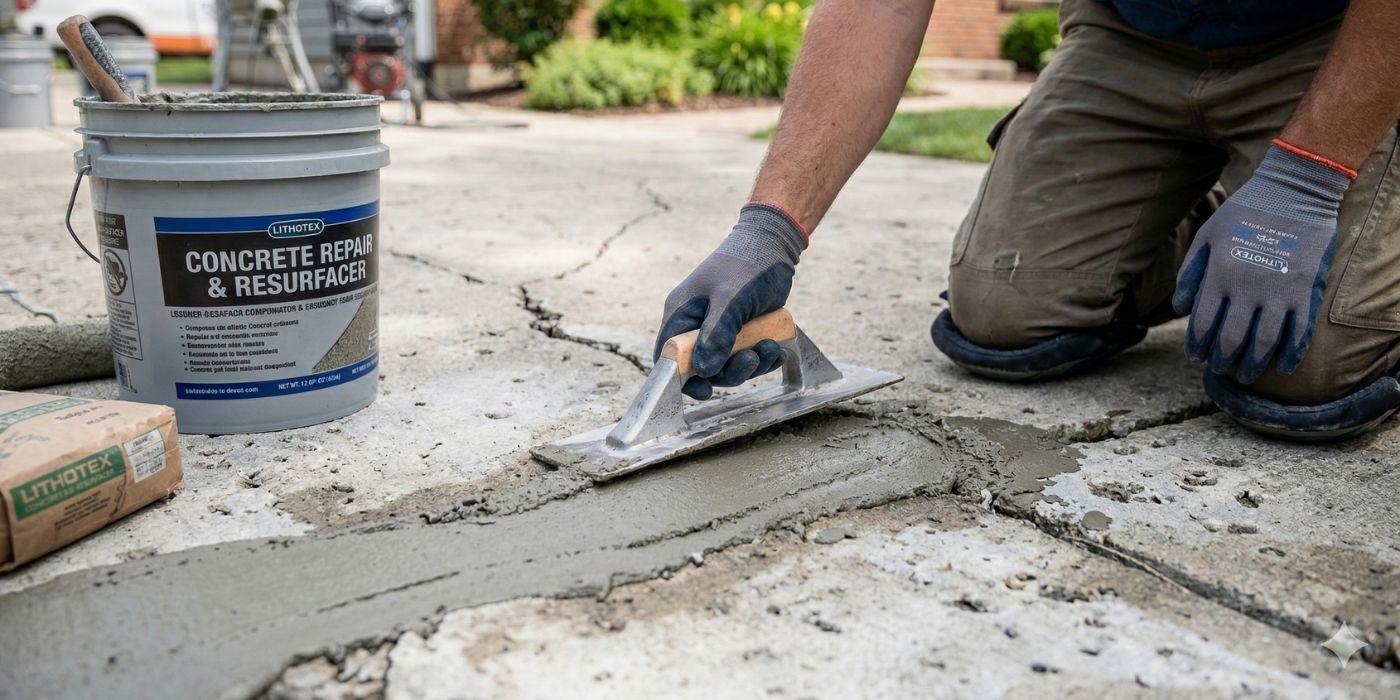
Concrete is built to last, but Los Angeles puts it through a lot. Between intense UV exposure, coastal salt air, occasional freeze events, and the constant movement of traffic and soil, even well-installed concrete begins to show its age.
Cracks widen, surfaces start to flake, and what was once a clean, solid slab becomes a liability. The good news is that most concrete damage does not require full replacement. Professional repair restores both the function and appearance of your surfaces at a fraction of the cost.
Allied Coatings has been repairing and restoring concrete across Southern California for over 25 years. Contact us today for a free estimate. Call (800) 630-2375 or email sa***@************gs.com.
Understanding Concrete Damage in Los Angeles
Los Angeles presents a specific set of challenges for concrete that property owners often underestimate. The region’s intense sun degrades surface sealers and dries out the concrete itself, making it more brittle over time. Coastal neighborhoods contend with salt air that penetrates the surface and corrodes embedded steel reinforcement. Inland areas experience temperature swings significant enough to trigger expansion and contraction cycles that gradually stress the slab from within.
Soil behavior adds another layer of complexity. Many parts of Los Angeles sit on expansive or unstable ground that shifts with moisture changes, putting uneven pressure on concrete slabs from below. When you combine that with heavy vehicle traffic, years of water exposure, and deferred maintenance, deterioration accelerates faster than most property owners expect.
Types of Concrete Damage to Know
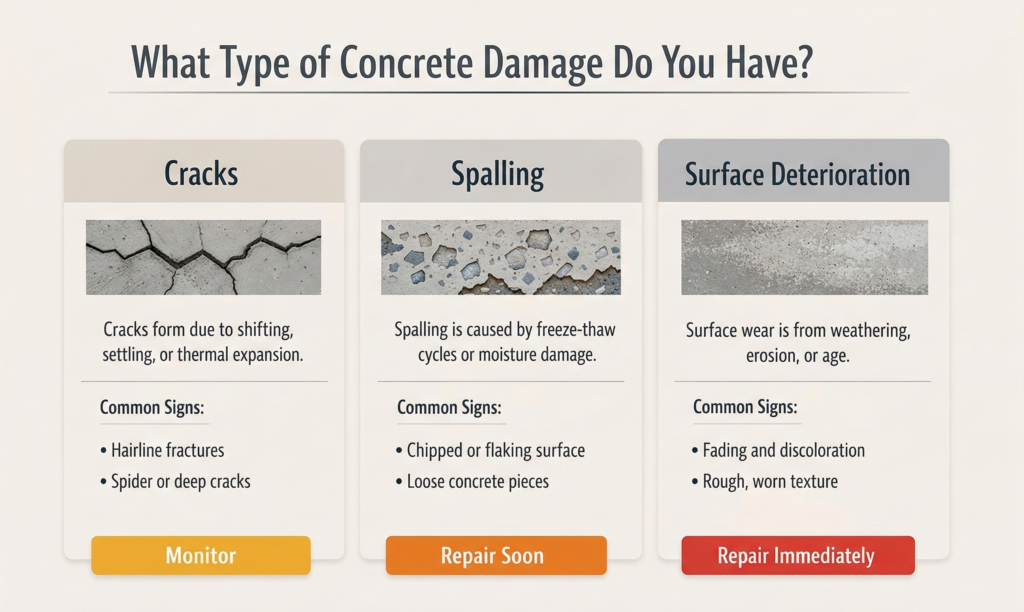
Cracks develop when concrete responds to ground movement, thermal stress, or structural load beyond its design threshold. Hairline cracks may seem cosmetic but allow water to enter, setting off a chain of deeper damage. Wider structural cracks indicate more serious underlying issues and require assessment before any surface repair begins.
Spalling occurs when the surface layer chips, pits, or flakes away. It is typically caused by water penetrating the slab, freezing, expanding, and breaking the surface from the inside. Salt exposure and corroding rebar beneath the surface also drive spalling, as rust expansion pushes outward and fractures the concrete above it.
Surface deterioration covers the broader category of wear: discoloration, erosion, uneven settling, and texture breakdown from daily use and weather exposure. These issues affect curb appeal and, in many cases, create genuine trip hazards on driveways, walkways, and commercial entries.
Why Professional Concrete Repair Is the Right Call
The instinct to replace damaged concrete entirely is understandable, but in most cases it is not necessary. Professional repair addresses the root cause of damage and restores the surface to full function without the cost, timeline, or disruption of demolition and replacement. Depending on the extent of damage, repair typically costs significantly less than a new pour while delivering results that last just as long when properly maintained.
Beyond cost, professional repair protects your property against liability. Cracked driveways, uneven walkways, and spalled commercial entries create real risk for anyone who uses them. Restoring those surfaces removes the hazard and demonstrates the kind of property stewardship that protects long-term value.
Allied Coatings approaches every project with a thorough assessment before any work begins. Their team identifies not just the visible damage but the cause behind it, which is the only way to ensure the repair holds.
Common Causes of Concrete Damage in Los Angeles
Environmental Stress
Los Angeles’s climate may seem mild, but its effect on concrete is cumulative. UV radiation breaks down surface sealers and oxidizes the top layer of concrete. Coastal salt spray penetrates pores and weakens the internal structure. When temperatures drop enough to trigger freeze events, any moisture already inside the slab expands and accelerates cracking and spalling from within.
Water Intrusion and Moisture
Water is the primary driver of concrete deterioration across all climates, and Los Angeles is no exception. Once moisture finds a path into the slab through a crack or pore, the damage cycle begins. In slabs with steel reinforcement, water exposure leads to rust, and rust expansion exerts pressure that fractures the surrounding concrete. Even in areas without rebar, repeated wet-dry cycles weaken the internal matrix over time.
Poor Installation and Material Quality
Concrete that was mixed, poured, or finished incorrectly is more vulnerable to every form of environmental stress. Inadequate curing time, an improper water-to-cement ratio, or insufficient surface preparation at the time of installation all shorten the lifespan of the slab and create conditions where damage appears earlier and spreads faster.
Professional Concrete Repair Methods
Epoxy Crack Injection
For structural cracks, epoxy injection is the most effective and permanent solution available. Low-viscosity epoxy is injected deep into the crack under controlled pressure, filling voids completely and bonding the two sides together. Once cured, the repaired section is typically stronger than the surrounding concrete and fully resistant to moisture penetration. Allied Coatings technicians seal the surface, place injection ports at measured intervals, and carefully monitor pressure to ensure complete saturation throughout the crack.
Concrete Resurfacing and Overlays
When surface damage is widespread, resurfacing provides comprehensive restoration without removing the existing slab. A polymer-modified overlay is applied over the prepared surface, covering cracks, staining, texture loss, and minor unevenness in a single process. The result is a renewed surface that can be finished in a range of textures and colors to match or improve on the original appearance. Allied Coatings offers everything from smooth trowel finishes to textured knockdown patterns and custom color stains.
If you’re evaluating whether a full-surface solution is the right fit, it helps to understand how these systems perform in larger, high-traffic environments—especially with commercial concrete resurfacing.
Spalling Repair
Spalling requires a targeted approach. Loose and deteriorated material is removed down to a sound substrate, any exposed rebar is treated with a corrosion inhibitor, and the affected area is filled with high-performance repair mortar engineered to bond with the existing concrete. For more extensive spalling, a full resurfacing overlay addresses the entire surface while sealing against future moisture intrusion.
Waterproofing and Protective Coatings
Repair is only as durable as the protection applied over it. Allied Coatings finishes every project with professional-grade sealers or coatings suited to the surface’s specific exposure conditions. High-performance epoxy and polyurethane systems create a barrier against water, UV damage, chemicals, and abrasion, dramatically extending the life of the repair and reducing the maintenance required to keep the surface in good condition.
The Allied Coatings Repair Process
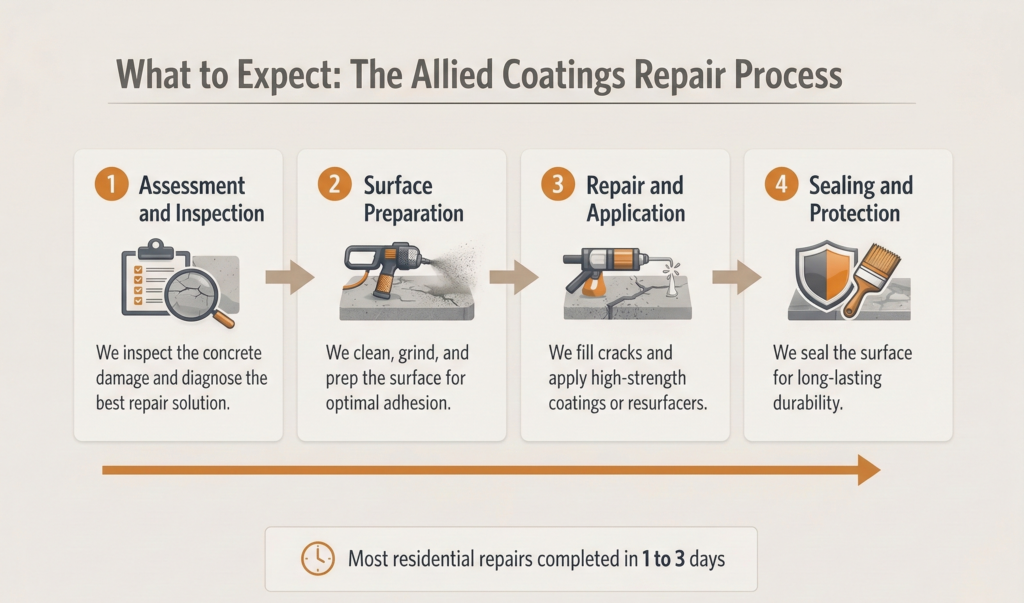
Assessment and Inspection
Every project begins with an on-site evaluation to determine the type, extent, and cause of damage. Allied Coatings examines whether issues are cosmetic or structural and whether soil movement or moisture beneath the slab is contributing to surface problems. This step shapes the repair strategy and ensures the right materials and methods are selected for each specific situation.
Surface Preparation
Proper preparation is where long-term results are built. Allied Coatings uses diamond grinding, shot blasting, and pressure washing to remove loose material, existing coatings, oils, and contaminants. Cracks and damaged areas are addressed before any overlay or coating is applied. Without this step, even premium materials will fail prematurely.
Repair and Application
Repair materials are applied based on the findings from the assessment: epoxy injection for structural cracks, repair mortar for spalled sections, and resurfacing overlays for widespread surface damage. Each product is applied according to manufacturer specifications under controlled conditions to ensure the correct cure and maximum performance.
Sealing and Final Inspection
Once repairs have cured, a protective sealer or topcoat is applied to lock in the results and defend against future deterioration. Allied Coatings conducts a final walkthrough to confirm quality before the project is considered complete. Most residential repairs are ready for use within 24 to 48 hours of completion.
What Does Concrete Repair Cost in Los Angeles?
Professional concrete repair is a cost-effective alternative to full replacement in most situations. Resurfacing in Los Angeles generally ranges from $3 to $10 per square foot depending on surface area, damage severity, chosen finish, and any additional features like decorative staining or slip-resistant treatments. Full slab replacement carries significantly higher costs when demolition, disposal, and new material are factored in.
Allied Coatings provides detailed, transparent written estimates before any work begins so there are no surprises. Getting a professional assessment early also helps avoid the scenario where minor damage is left untreated long enough to require the more expensive intervention.
Preventive Maintenance for Los Angeles Concrete
The most cost-effective approach to concrete care is staying ahead of damage before it compounds. Sealing your concrete every two to five years creates a renewable barrier against moisture, UV exposure, and chemical attack. Keeping gutters and drainage directed away from slabs reduces water pooling and the subsurface moisture that drives cracking and settlement. Addressing small cracks promptly, before water finds its way in and the cycle begins, is the single most impactful maintenance habit a property owner can adopt.
Frequently Asked Questions
How long does concrete repair typically take?
Most residential concrete repair projects in Los Angeles are completed within one to three days, depending on the size of the affected area, the type of damage, and the repair method used. Epoxy crack injection and localized spalling repairs often finish faster, while full resurfacing projects covering larger surfaces may take closer to three days including preparation, application, and curing. Allied Coatings coordinates project timing to minimize disruption to your daily routine.
Is concrete repair cheaper than replacement?
In most cases, yes, significantly so. Professional repair typically costs a fraction of full slab replacement when demolition, disposal, and new material costs are factored in. The exact savings depend on the extent of damage, but repair is almost always the right first option for surfaces that retain structural integrity. Allied Coatings provides honest assessments and will only recommend replacement when repair is genuinely not a viable long-term solution.
Can minor cracks be repaired without resurfacing the entire surface?
Yes. Isolated cracks can be addressed with targeted repair methods including epoxy injection or crack filler without disturbing the surrounding surface. If cracks are widespread or accompanied by surface deterioration, resurfacing the entire area often produces a more consistent and cost-effective result. Allied Coatings evaluates each situation individually and recommends the approach that delivers the best long-term outcome for the specific conditions.
How long will repaired concrete last?
When professionally installed and properly maintained, repaired and resurfaced concrete typically lasts 10 to 15 years or longer. Epoxy-injected structural cracks can outlast the surrounding concrete when fully cured. Longevity depends on the quality of surface preparation, the repair materials used, and how consistently the surface is resealed and maintained over time.
What causes concrete spalling in Los Angeles?
Spalling in Los Angeles is most commonly caused by moisture penetrating the slab and triggering expansion and contraction cycles, salt air from coastal exposure corroding embedded reinforcement, and surface oxidation from prolonged UV exposure. Poor original installation, including inadequate curing or an improper concrete mix, also makes slabs significantly more susceptible to spalling as they age.
Can I repair damaged concrete myself?
Minor surface cracks and cosmetic imperfections can sometimes be addressed with off-the-shelf products, but DIY repairs rarely bond as reliably or last as long as professional work. Structural cracks, spalling, and any damage involving moisture infiltration or rebar corrosion require proper diagnosis, professional-grade materials, and application techniques that consumer products cannot replicate. Attempting these repairs without the right expertise often leads to premature failure that costs more to fix properly the second time.
Do I need to seal concrete after repairs are made?
Yes, sealing is an essential final step in any repair project. A professional-grade sealer creates a protective barrier against water intrusion, UV degradation, and chemical exposure that would otherwise accelerate deterioration of the repaired surface. Allied Coatings applies sealers suited to each surface’s specific exposure conditions and recommends a maintenance resealing schedule to keep that protection intact over time.
What is the difference between concrete repair and resurfacing?
Concrete repair targets specific areas of damage, such as individual cracks, spalled sections, or localized deterioration, using materials matched to the type and depth of the damage. Resurfacing applies a polymer-modified overlay across the entire surface to address widespread wear, staining, or texture loss comprehensively. The two approaches are often used together, with targeted repairs completed first before a resurfacing overlay is applied over the full area.
Restore Your Los Angeles Concrete with Allied Coatings
Damaged concrete does not get better on its own. Left untreated, small cracks become structural problems, spalling spreads, and what could have been a straightforward repair turns into a much larger project. Allied Coatings brings over 25 years of hands-on experience to every concrete repair project across Los Angeles, Orange County, and San Diego County, delivering restorations that are built to last in Southern California’s demanding conditions.
Contact Allied Coatings today to schedule your free estimate. Call (800) 630-2375, visit 795 North Ave. #D, Vista, CA 92083, or reach the team at sa***@************gs.com. You can also request an estimate online at alliedcoatings.com.