
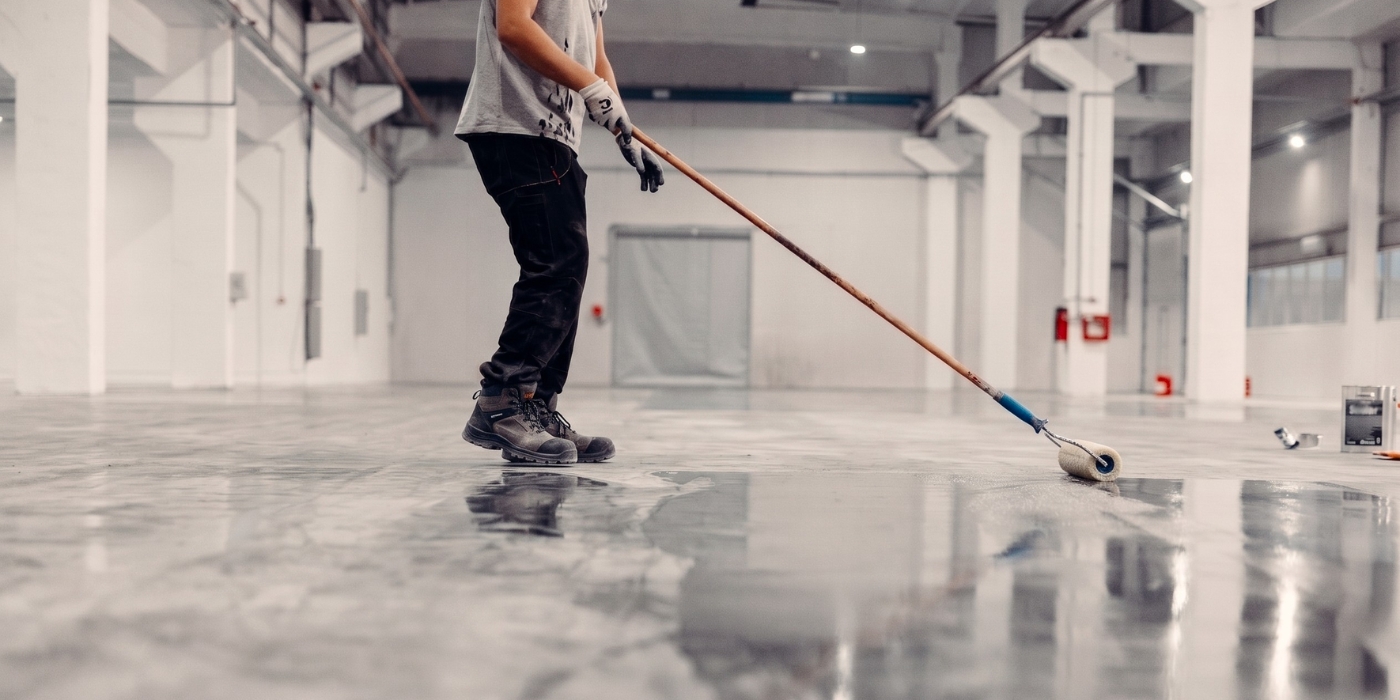
Concrete sealing in Los Angeles takes more abuse than the same job would in most places. The sun is brutal, the coast throws salt into the air, and a commercial slab is under forklifts, foot traffic, and chemical spills all day.
Concrete is porous, which is the whole problem. An unsealed slab soaks up water, oil, and road salt, and that is what turns into the staining, the dusting, and eventually the spalling you see on neglected floors.
Sealing keeps that out, and it is cheap next to the alternative. Restoration is what you do once it is already in.
Allied Coatings has sealed and restored commercial concrete across Los Angeles County for more than 25 years, on parking structures, warehouse floors, loading docks, and storefronts. Before you hire anyone, know that the sealer itself is the easy part. The harder call is matching it to your slab, your exposure, and the coating rules LA enforces.
What Sealing Does for Commercial Concrete in LA
A sealer is a barrier. It stops water, salt, oil, and cleaning chemicals from soaking into the pores where the real damage starts.
Water that gets in and sits causes cracking and scaling. Salt from coastal air drives chloride into the slab, where it rusts the rebar until the metal swells and flakes the surface off. Oil and chemicals leave stains that never fully lift. Seal the slab and most of that sits on top and wipes away.
LA leans on a sealer harder than most climates do. Strong sun is rough on anything sitting on a surface, so an unprotected or poorly sealed slab fades and breaks down faster here than it would somewhere gray and mild.
Closer to the water, in Long Beach, San Pedro, and Santa Monica, salt in the air carries that chloride problem to buildings that are not remotely beachfront. Add steady heat and the weight of daily traffic, and an unsealed floor is on a clock.
Penetrating vs Film-Forming Sealers
Sealers split into two families, and which one you pick decides how long the job holds. Penetrating sealers, usually silane or siloxane, soak into the concrete and form a water-repelling barrier inside the pores.
They do not change how the surface looks or feels, they keep their traction, and because they live below the surface, LA sun does not degrade them. They also stay breathable, letting moisture vapor escape instead of trapping it. For exterior slabs, parking areas, walkways, and anything fighting coastal salt, this is usually the right call, and a good one lasts five to ten years.
Film-forming sealers, the acrylics, epoxies, and polyurethanes, sit on top and build a hard, often glossy layer. They take direct chemical spills and abrasion better than a penetrating sealer, which makes them a common choice for interior commercial floors, and they are the basis of most epoxy floor systems.
The catch has two parts. A film over a slab that is still giving off moisture vapor will blister and peel as the trapped vapor pushes it off, and an acrylic film outdoors tends to yellow and flake under steady sun. Put one on a properly prepared, dry slab in the right spot and it holds up well. Put it in the wrong spot and it fails early.
The Coating Rules That Catch LA Owners Off Guard
Most people do not think about air-quality law when they seal a floor, but in Los Angeles it shapes what can legally go down.
California regulates these coatings district by district, and the South Coast district that covers LA enforces the toughest version in the country. Under South Coast AQMD Rule 1113, concrete and masonry sealers are capped at 100 grams of VOC per liter and floor coatings at just 50, against a federal ceiling of 600.
In plain terms, a sealer someone could legally buy and use in another state may not be allowed on your LA property. Low-VOC and water-based silane and siloxane sealers clear these limits without giving up performance, so compliance and durability are not a trade-off. What matters is hiring a contractor who works with compliant products by default, instead of finding out after the job that what went on your slab was not rated for the South Coast district.
Restoration Comes First
You cannot seal your way out of damage. A sealer protects sound concrete and does nothing for a slab that is already cracked, spalled, or worn, and laying it over those problems just locks them in. Restoration is the step that gets the surface back to something worth sealing.
For cracks that have stopped moving, epoxy injection fills them under pressure and bonds the concrete back together, stronger than it was on either side of the crack. Worn, pitted, or spalled surfaces get resurfaced with an overlay that gives you a fresh, solid top to work from. Everything gets cleaned and profiled so the sealer or coating bonds properly. And if the concrete is new, it has to cure for about 28 days before any sealer goes on, or the trapped moisture wrecks both the slab and the finish.
Cost, Downtime, and How Often to Reseal
Sealing is one of the cheaper ways to protect a commercial slab, and far cheaper than replacing concrete you let go too long. Price tracks square footage, the condition of the surface, and which system the slab needs, since a penetrating sealer on sound concrete is a different job from stripping a failed coating and starting over. Restoration work, when it is needed, is the bigger line item.
Most sealing jobs are quick and can be scheduled around your operation, often overnight or in sections so you are not shutting down. Sealers do not last forever, though. Plan on resealing every few years, sooner for surfaces taking heavy traffic or constant sun, and a penetrating sealer will generally stretch further between coats than a topical one.
If your parking structure, warehouse floor, or storefront concrete is fading, staining, or starting to break down, sealing it now costs far less than rebuilding it later. Allied Coatings seals and restores commercial concrete across Los Angeles County, and they will tell you up front whether the slab needs a penetrating sealer, a coating, or repair work first.
Call (800) 630-2375 or request a free estimate, and you can look through finished projects in their gallery. They also work throughout Orange County, San Diego County, and the rest of Southern California from their shop at 795 North Ave. #D, Vista, CA 92083.
Frequently Asked Questions
How long does concrete sealing last?
A penetrating silane or siloxane sealer usually lasts five to ten years, while a topical film like acrylic tends to need redoing sooner. How long you get depends on traffic, sun exposure, and whether the surface was properly prepped. Heavy commercial floors and slabs in full sun wear faster than covered or low-traffic areas.
For a commercial floor, is a penetrating sealer or a film-forming one better?
It depends on where the floor is and what hits it. Penetrating sealers win outdoors and anywhere traction, sun, and salt are in play, since they soak in and will not peel or yellow. Film-forming coatings like epoxy are tougher against direct chemical spills and abrasion, which makes them a better fit for interior floors that stay dry.
Do commercial sealers in Los Angeles have to meet special air-quality rules?
Yes. Los Angeles falls under South Coast AQMD Rule 1113, which sets the strictest limits on coating VOCs in the country. Concrete sealers are capped at 100 grams per liter and floor coatings at 50, so a product that is legal elsewhere may not be allowed here. Low-VOC, water-based sealers are made to comply.
Can you seal concrete that is already cracked or worn?
Not directly, and sealing over damage just traps the problem. Cracks need repair first, usually epoxy injection, and badly worn or spalled surfaces need resurfacing before a sealer goes on. Once the surface is sound and clean, sealing protects it and keeps the repair from sliding backward.
Does sealing make a concrete floor slippery?
A penetrating sealer does not, since it soaks in and leaves the surface texture unchanged. A glossy film-forming sealer can get slick when wet, but anti-slip additives or a textured finish handle that. For wet areas like wash bays or entries, the finish is chosen with traction in mind.