
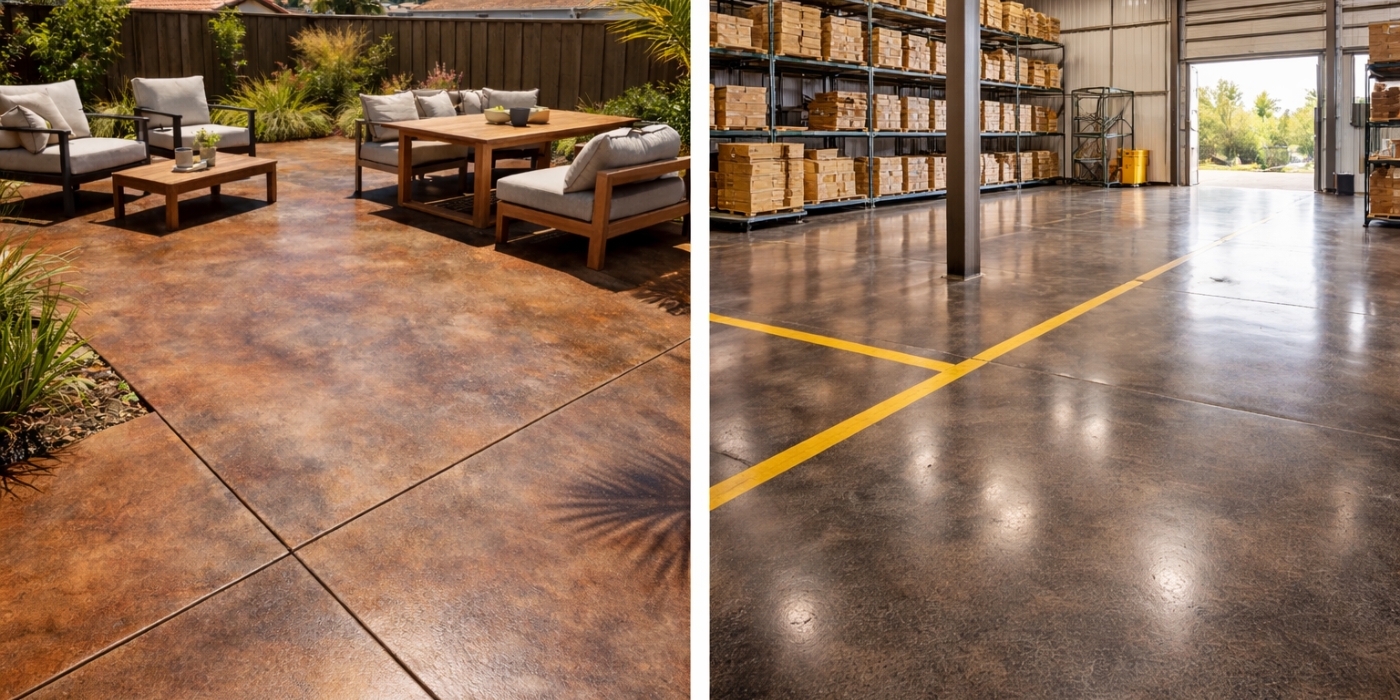
Wilmington sits at the intersection of two very different worlds. On one side, working-class residential neighborhoods with homes, driveways, patios, and garages that deserve better than plain weathered concrete. On the other, one of the largest industrial and port complexes in the country, with warehouses, manufacturing facilities, and commercial operations that need flooring built to handle serious demands.
Professional concrete staining near you serves both of those worlds effectively, transforming existing slabs into durable, finished surfaces that perform under real conditions and look genuinely professional doing it.
Allied Coatings has been delivering concrete staining to residential and commercial properties across Southern California for over 25 years, bringing the same technical standards and premium materials to a Wilmington garage floor as they bring to a large-scale industrial facility.
Ready to transform your concrete? Contact Allied Coatings for a free estimate. Call (800) 630-2375 or email sa***@************gs.com.
What Is Concrete Staining and How Does It Work?
Concrete staining is a decorative finishing process that infuses color directly into the surface of the slab rather than coating it from the outside. The stain penetrates the concrete and bonds at a chemical or molecular level, becoming part of the material itself. Because the color lives inside the concrete rather than on top of it, there is no surface layer to chip, peel, or flake under the pressure of traffic, chemical exposure, or the elements.
The finish has a natural translucency and depth that surface coatings simply cannot replicate, with tones that shift subtly across the surface and reflect the authentic character of the concrete beneath.
That permanence is what makes staining such a practical investment for Wilmington properties. Whether the surface faces the daily friction of vehicle traffic on a residential driveway or the chemical and mechanical demands of an industrial floor, properly installed and sealed stained concrete handles it without the recurring reapplication cycles that paint and standard coatings require.
Acid-Based vs. Water-Based Concrete Stains
Acid-Based Stains
Acid stains use a solution of metallic salts and hydrochloric acid that reacts chemically with the calcium compounds in the concrete, creating permanent color changes within the upper layer of the slab.
The reaction produces organic, variegated patterns that are unique to every surface. Because the chemistry is influenced by the concrete’s own mineral composition, no two acid-stained floors look exactly alike. The resulting tones are warm and natural, ranging through tans, terra cottas, dark chestnuts, and soft blue-greens that carry the depth and character of aged stone.
Acid stains are exceptionally durable and UV-resistant, making them well suited to Wilmington’s outdoor residential surfaces and industrial spaces where longevity under heavy use is non-negotiable.
Professional application requires careful management of the chemical reaction phase and thorough neutralization and rinsing afterward to stabilize the surface before sealing. Allied Coatings follows strict protocols at this stage to ensure the sealer bonds correctly and the finish performs as intended over its full lifespan.
Water-Based Stains
Water-based stains use inorganic pigments suspended in polymer-bonded water solutions to penetrate the concrete surface and deliver consistent, predictable color without relying on a chemical reaction.
The results are more uniform and controlled than acid stains, which makes them the right choice when a specific color needs to match a design palette, align with brand colors in a commercial space, or achieve a contemporary look that earthy acid tones cannot produce.
Their broader color palette and lower VOC emissions also make water-based stains the more practical option for interior applications and occupied commercial environments where fumes during application are a concern.
In Wilmington’s industrial settings near the port, where air quality compliance is a genuine operational consideration, water-based formulations meet California’s stringent VOC standards without sacrificing performance.
Benefits of Concrete Staining for Wilmington Residential Properties
Durability That Holds Up in Real Conditions
Wilmington residential properties face a specific combination of stressors: proximity to the port brings industrial air quality challenges, coastal humidity accelerates surface deterioration, and the active outdoor lifestyle of the area puts patios, driveways, and pool decks under consistent pressure.
Stained concrete handles all of these conditions effectively when sealed with the right system. The penetrating finish resists moisture intrusion, UV oxidation, and the surface abrasion that comes with daily residential use without requiring the frequent reapplication cycles that paint demands.
Cost-Effective Upgrade Without Replacement
Professional staining typically starts around $2 to $4 per square foot for basic single-color residential applications, with intermediate work ranging from $4 to $10 per square foot and advanced custom designs reaching $12 to $25 or more depending on complexity.
At every price point, staining delivers significantly better long-term value than replacing the slab with tile, hardwood, or natural stone, because it works with the concrete that is already in place and eliminates demolition, disposal, and new material costs entirely.
Design Flexibility That Fits Any Home
The design range available through professional staining goes well beyond what most Wilmington homeowners expect from their concrete. Warm earth tones including weathered taupes, dark chestnuts, Arizona tans, terracottas, and rich café browns complement the architectural styles common throughout the neighborhood.
Custom color blends, marbled effects, and decorative pattern work allow property owners to personalize their spaces in ways that standard concrete or paint simply cannot achieve.
Industrial and Commercial Applications in Wilmington
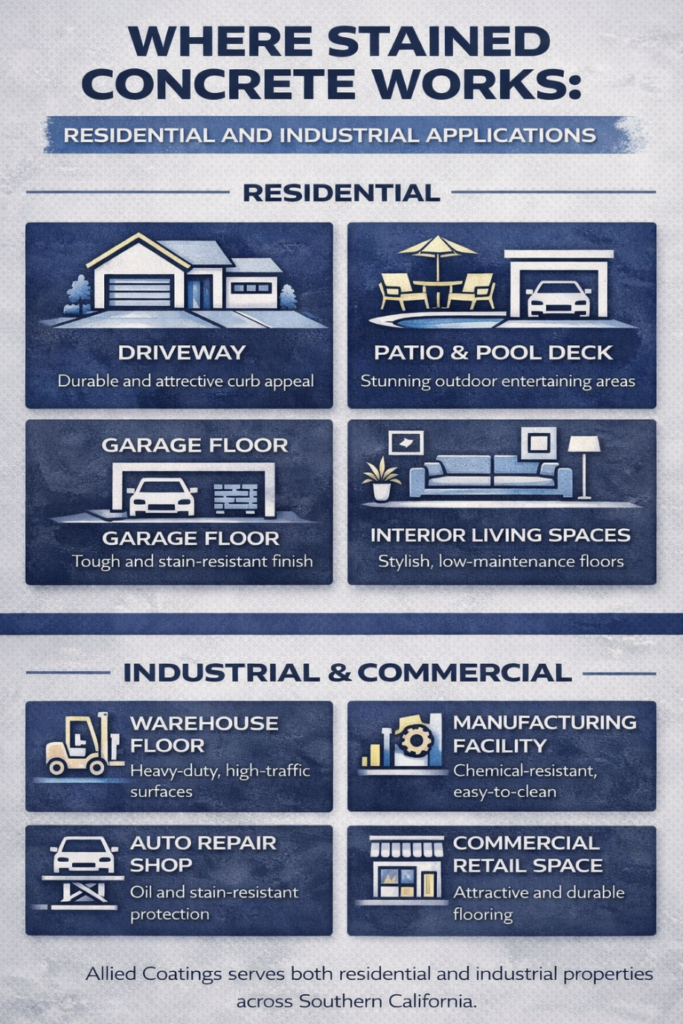
Wilmington’s industrial character makes it one of the most demanding environments for flooring in Southern California. Warehouses, manufacturing facilities, auto repair shops, and port-adjacent commercial operations all require surfaces that can withstand heavy machinery, chemical exposure, forklift traffic, and the daily physical demands of an active industrial operation.
Stained and sealed concrete handles all of those requirements effectively. The penetrating finish resists oils, chemicals, and industrial cleaning agents that would degrade surface coatings quickly.
Properly specified topcoat systems, including epoxy and polyurethane finishes applied over the stain layer, add an additional tier of chemical resistance and abrasion protection suited to the most demanding commercial environments. Color-coded staining systems can also be used to designate safety zones, traffic lanes, and work areas within large industrial facilities, improving both organization and workplace safety.
For commercial retail and office spaces in Wilmington, stained concrete delivers the professional, polished appearance that customer-facing environments require while holding up under the foot traffic and cleaning demands of daily commercial operations.
Popular Color Options for Wilmington Properties
Allied Coatings offers a wide palette of stain colors suited to both residential and industrial applications. Old Mission delivers weathered taupe tones that work well with the architectural character of Wilmington’s established neighborhoods.
Dark Chestnut provides rich, deep brown hues that read as sophisticated in both residential and commercial settings. Arizona Tan offers a warm, earthy neutral that complements outdoor spaces and landscaping. Terracotta brings reddish-orange warmth to patios and driveways. Café provides deep, sophisticated brown tones well suited to interior residential and commercial floors.
Custom color matching is available for projects requiring a specific hue to align with an existing design palette or commercial brand identity.
The Allied Coatings Staining Process
Surface Preparation
Every Allied Coatings project begins with thorough surface preparation, which determines how evenly the stain penetrates and how long the finished result performs. The concrete is cleaned, degreased, and profiled through diamond grinding or pressure washing to remove contaminants, existing coatings, and surface residue that would block absorption.
In Wilmington’s industrial environments, where floors are often contaminated with oil, chemical residue, and years of built-up grime, this preparation phase is particularly critical and may require more extensive cleaning and profiling than standard residential work. Cracks and damaged areas are repaired before any stain is applied.
Stain Application
Allied Coatings technicians apply stain using methods matched to the product type and the project’s design requirements. Spray application with professional-grade equipment delivers consistent, even coverage across large residential and industrial floor areas.
Brush and roller techniques allow for controlled work on decorative elements, borders, and multi-color pattern applications. For acid stain projects, the application sequence is carefully managed through the chemical reaction phase and followed by thorough neutralization before sealing begins.
Sealing and Protection
A protective sealer applied after curing locks in the color and defends the surface against the specific exposure conditions each Wilmington property faces. For industrial applications, Allied Coatings specifies epoxy or polyurethane topcoat systems that provide chemical resistance and abrasion protection beyond what a standard sealer delivers.
For residential outdoor surfaces, UV-resistant sealer formulations protect against the sun and coastal humidity exposure that drives surface deterioration over time. Anti-slip additives are incorporated for pool decks, patios, and any surface with regular moisture exposure. Most projects are complete within one to three days.
Maintaining Stained Concrete in Wilmington
Day-to-day maintenance is straightforward regardless of whether the surface is residential or industrial. Regular sweeping or dust mopping removes abrasive particles that could scratch the sealer. Mopping with a pH-neutral cleaner handles deeper cleaning without degrading the protective layer.
For industrial surfaces exposed to chemical spills, prompt cleanup prevents prolonged contact with the sealer and extends its effective lifespan. Resealing every one to three years, depending on traffic volume and exposure conditions, maintains the barrier that keeps the underlying stain performing as intended. Avoiding acidic cleaners and solvent-based products preserves the sealer integrity and reduces the frequency of reapplication over the surface’s lifetime.
Frequently Asked Questions
How long does concrete staining take for a Wilmington property?
Most residential staining projects are completed within one to three days, covering surface preparation, stain application, curing, and sealing. Industrial and commercial projects covering larger floor areas or requiring more extensive surface preparation may take longer.
Allied Coatings works with property managers and facility operators to schedule projects around operational hours, minimizing disruption to residential routines and commercial operations. Curing times vary based on temperature and humidity, and Allied Coatings monitors conditions throughout the project to ensure the stain and sealer develop correctly.
Can old or heavily used industrial concrete be stained?
Yes, provided the underlying slab is structurally sound. Industrial concrete in Wilmington is often heavily contaminated with oil, chemical residue, and decades of built-up grime that must be fully removed through professional grinding and cleaning before staining can begin.
Cracks and damaged areas are repaired during preparation. For floors with extensive surface damage or contamination that cannot be fully addressed through preparation alone, a resurfacing overlay can create a clean, receptive substrate before staining. Allied Coatings evaluates every floor during the initial assessment and recommends the right approach for the specific conditions.
Will stained concrete peel or chip under industrial use?
No. Because the stain penetrates the concrete and bonds within the slab itself rather than sitting on top of it, there is no surface layer to delaminate or chip under physical or chemical stress.
The color is part of the concrete structure. What can degrade under heavy industrial use is the sealer applied over the stain, which is why Allied Coatings specifies topcoat systems rated for the specific demands of each industrial application and recommends a resealing schedule appropriate to the traffic and chemical exposure the floor faces.
Can I update or change the color of existing stained concrete?
Yes. Stained concrete can be re-stained to update or shift the color by cleaning the surface, lightly profiling it to open the pores, and applying a new stain layer.
The existing color will influence the final result, particularly with translucent acid stains, so Allied Coatings assesses the current surface condition and color before recommending a restaining approach. Water-based stains and dyes generally offer more control over color updates than acid stains due to their more predictable color development.
Is concrete staining suitable for Wilmington’s outdoor residential surfaces?
Yes. Driveways, patios, pool decks, and walkways are among the most common and effective applications for concrete staining in Southern California. Wilmington’s coastal proximity and year-round UV exposure make proper sealer selection particularly important for outdoor surfaces.
Allied Coatings uses UV-resistant sealer systems on all exterior residential applications to maintain color vibrancy and surface protection against the specific conditions Wilmington properties face. Anti-slip additives are standard practice for pool decks and any outdoor surface with regular water exposure.
How do I maintain stained concrete in an industrial setting?
Industrial stained concrete requires the same basic maintenance principles as residential surfaces but on a more demanding schedule. Sweep or dust mop regularly to remove abrasive debris. Use pH-neutral or approved industrial cleaners for mopping rather than acidic or solvent-based products that can degrade the sealer.
Address chemical spills immediately to minimize contact time with the protective layer. Inspect the sealer annually in high-traffic zones and reseal as needed, typically every one to two years in active industrial environments. Allied Coatings provides a specific maintenance protocol for every commercial and industrial project after completion.
Transform Your Wilmington Property with Allied Coatings
Whether you are upgrading a residential driveway, refreshing a backyard patio, or protecting an industrial floor from the demands of daily operations, Allied Coatings brings over 25 years of concrete staining expertise to Wilmington and the surrounding Southern California region.
Their team understands the specific challenges that this community’s residential and industrial environments present and delivers finishes built to perform in both.
Contact Allied Coatings today to schedule your free estimate. Call (800) 630-2375, visit 795 North Ave. #D, Vista, CA 92083, or reach the team at sa***@************gs.com. You can also request an estimate online at alliedcoatings.com.