
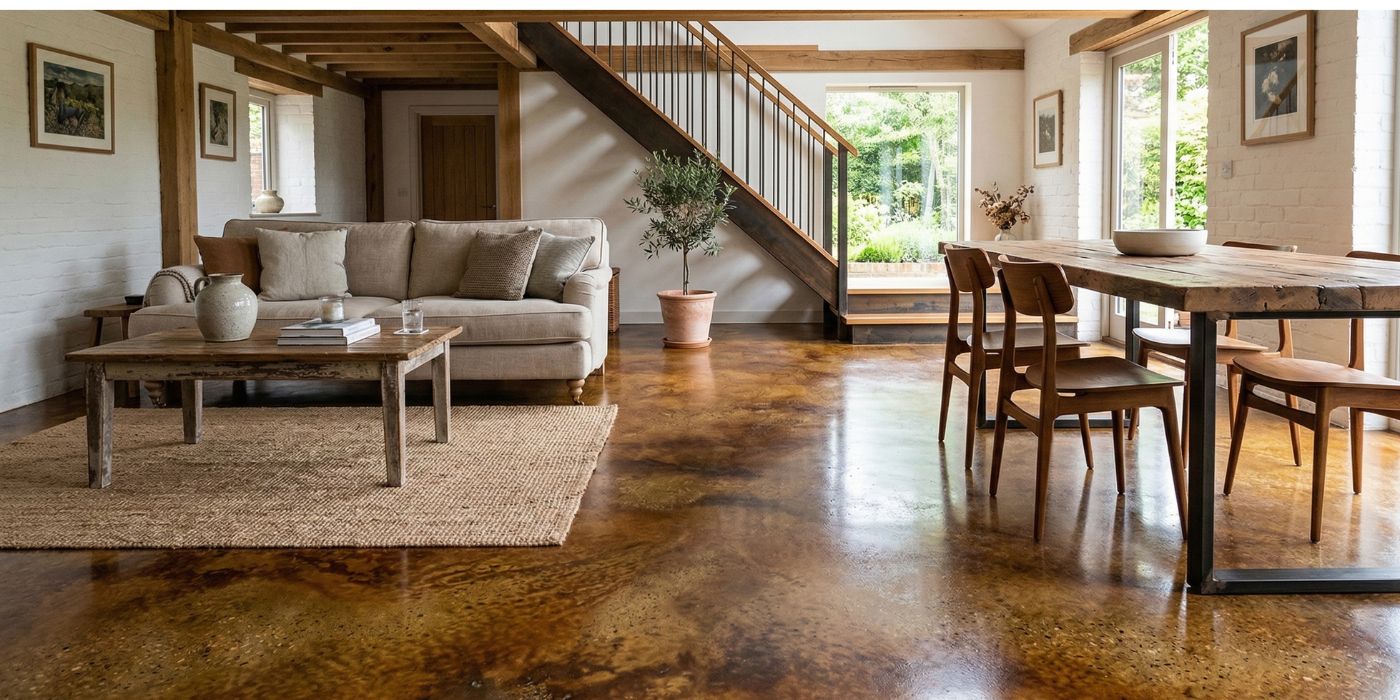
Most people walk past stained concrete without realizing what they are looking at. They see a warm, rich floor with natural depth and variation and assume it is stone, tile, or some premium material that cost a fortune. In reality, it is the same concrete slab that was already there, transformed through a staining process that penetrates the surface and creates color that becomes a permanent part of the material itself.
For Los Angeles homeowners and business owners looking to elevate their spaces without the cost of full replacement, concrete staining is one of the most effective and underutilized options available.
Allied Coatings has been delivering professional concrete staining across Los Angeles, San Diego, and Orange County for over 25 years, bringing technical expertise and design precision to every residential and commercial project they take on.
Ready to transform your concrete? Contact Allied Coatings for a free estimate. Call (800) 630-2375 or email sa***@************gs.com.
What Is Concrete Staining and Why Does It Last?
Concrete staining is a decorative finishing process that infuses color directly into the concrete surface rather than coating it from the outside. Because the stain bonds with the substrate at a chemical or molecular level, the result is a permanent color that cannot chip, peel, or flake the way paint or surface coatings eventually do.
The finish has translucent depth that highlights the natural texture and variation of the concrete beneath, giving each project a character that no two slabs ever replicate exactly. This permanence is what separates professional staining from other decorative options. The color is not sitting on top waiting to wear away.
It is part of the surface itself, which means it holds up under foot traffic, UV exposure, moisture, and the daily demands of both residential and commercial environments.
Types of Concrete Stains
Acid-Based Stains
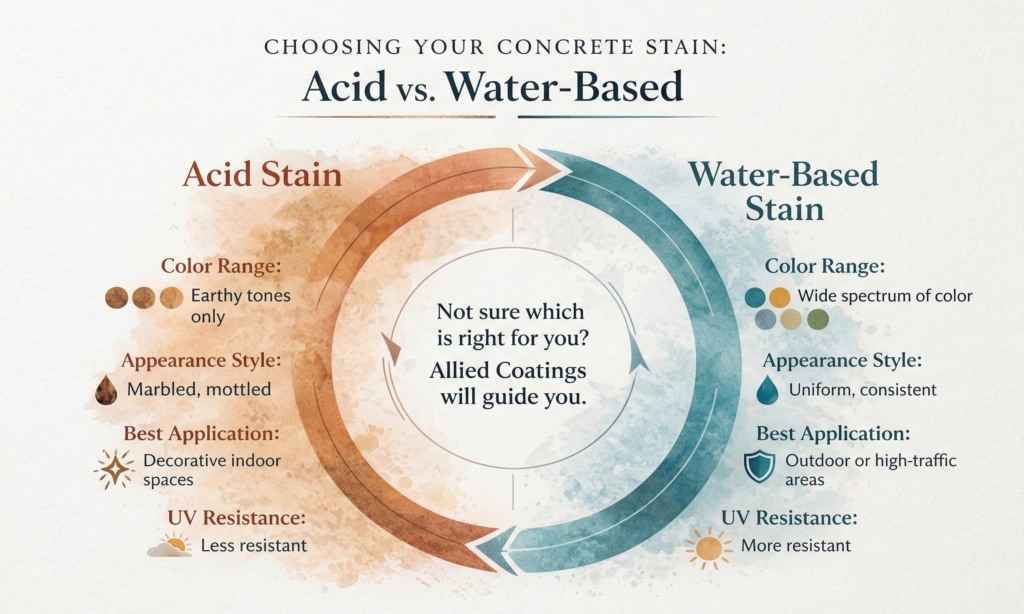
Acid stains are composed of metallic salts dissolved in an acid and water solution. When applied to concrete, they penetrate the surface and react chemically with the calcium compounds present in the slab, producing permanent color changes that vary organically based on the concrete’s own mineral composition.
No two applications look identical. The results are rich, marbled, and deeply textured, with earth tones including tans, browns, terra cottas, and blue-greens that closely resemble aged stone or natural leather.
The chemical reaction behind acid staining is also what makes it so durable. Because the color develops within the concrete rather than being applied over it, acid-stained surfaces are highly resistant to UV fading and heavy foot traffic.
They are particularly well suited to driveways, patios, and interior floors where longevity and organic character are both priorities. Professional application and proper neutralization after the reaction are essential to ensure the sealer bonds correctly and the finish performs as intended over time.
Water-Based Stains
Water-based stains use inorganic pigments suspended in water with polymer binders that penetrate the concrete’s pores and deliver consistent, predictable color. Unlike acid stains, water-based formulations are non-reactive, which means the color development is more controlled and uniform. This makes them the better choice for projects that require specific color matching, bold or vibrant hues, or decorative patterns that demand precision.
The color palette available with water-based stains is significantly broader than what acid chemistry can produce, including deep reds, vibrant blues, rich greens, and virtually any custom blend a project requires.
They also carry lower VOC emissions and are safer to handle during application, making them a more environmentally responsible option. In outdoor Los Angeles environments, pairing water-based stains with a high-quality UV-stable sealer is critical to maintaining color vibrancy over time.
Where Concrete Staining Works Best in Los Angeles
Interior Applications
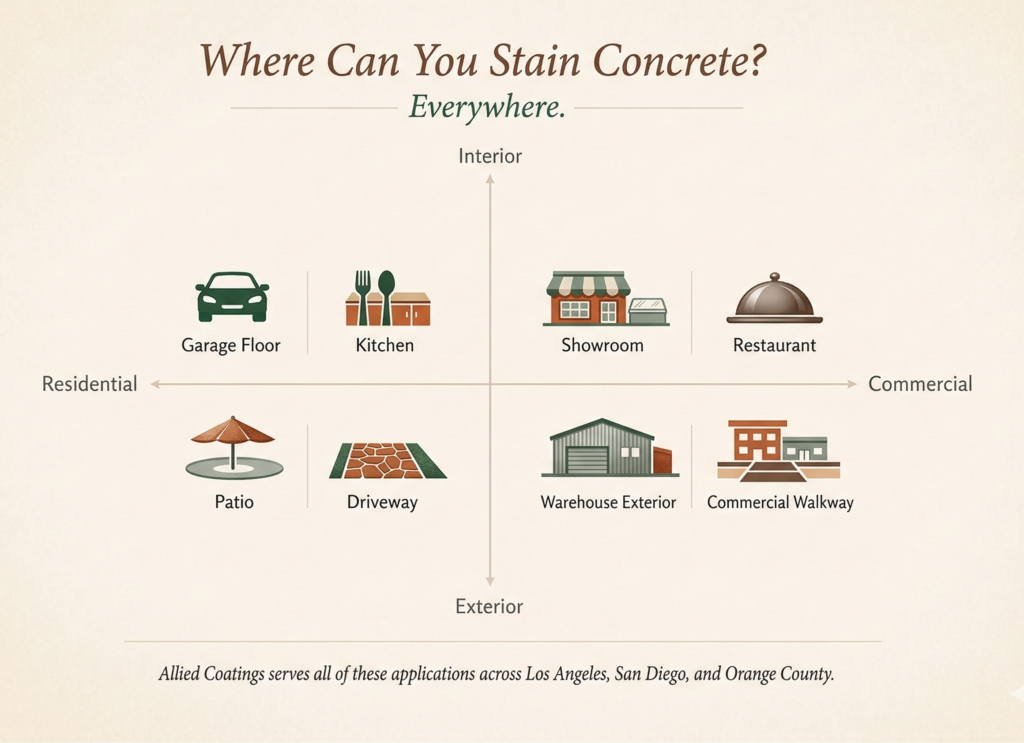
Los Angeles interiors benefit from stained concrete across a wide range of residential and commercial settings. Garage floors gain a polished, high-impact finish that holds up against oil, chemicals, and vehicle traffic.
Kitchen and living area floors take on a warm, sophisticated character that works equally well in modern minimalist and Mediterranean-influenced interiors. Retail showrooms, restaurants, and office spaces use stained concrete to create professional environments that are easy to maintain and visually compelling for customers and clients.
Basement floors are a particularly practical interior application. Staining a basement floor seals the surface against moisture while transforming what is typically an uninspiring utilitarian space into something genuinely usable and attractive. The finish handles the humidity and temperature fluctuations that basement environments present without degrading the way other flooring materials often do.
Exterior Applications
Los Angeles exteriors put concrete through a consistent gauntlet of UV exposure, occasional moisture, coastal salt air, and daily use. Stained concrete handles all of these conditions well, provided the right sealer is selected for the specific exposure. Driveways stained with acid or water-based systems gain both visual appeal and a layer of protection against oil penetration, UV oxidation, and surface wear.
Patios and pool decks become genuine design features rather than just functional slabs, with color and texture options that complement any outdoor living aesthetic. Walkways, pathways, and commercial exteriors benefit from the combination of durability and low maintenance that stained and sealed concrete provides.
The Allied Coatings Staining Process
Surface Preparation
Every staining project at Allied Coatings begins with thorough surface preparation, which is the single most important factor in determining how long the finish lasts and how good it looks. The concrete is cleaned and degreased to remove contaminants. Existing coatings, sealers, or adhesives are ground or stripped away to expose bare concrete.
Any cracks, chips, or surface imperfections are repaired before staining begins. For concrete that is too damaged or too dense to accept stain penetration effectively, a micro-topping overlay can recreate the surface and provide an optimal substrate.
New concrete must cure for at least 28 days before staining. The surface profile created during preparation determines how deeply the stain penetrates and how evenly the color develops, which is why Allied Coatings treats this phase as the foundation of the entire project.
Stain Application
Once the surface is prepared, Allied Coatings technicians apply the chosen stain using methods matched to the type of stain and the desired visual effect. Spray application delivers even, consistent coverage across large areas. Brush and roller techniques allow for more controlled, artistic work on detailed or patterned designs.
For acid stains, the application sequence and timing are carefully managed to guide the chemical reaction toward the intended result, followed by thorough neutralization and rinsing to stabilize the surface chemistry before sealing.
Sealing and Protection
A high-quality sealer applied after the stain has fully cured is what protects the investment long-term. The sealer locks in the color, creates a barrier against moisture and staining, and delivers the chosen finish level, whether matte, satin, or high-gloss.
For exterior surfaces in Los Angeles, Allied Coatings uses UV-resistant sealer formulations to prevent yellowing and color shift under direct sun exposure. Anti-slip additives can be incorporated into the sealer for pool decks, patios, and any area with regular water exposure.
Why Concrete Staining Makes Financial Sense
Concrete staining delivers the visual impact of high-end flooring materials like natural stone, tile, or hardwood at a fraction of the material and installation cost. For large commercial spaces or extensive residential projects, that cost difference is substantial.
Beyond the initial savings, stained concrete requires minimal ongoing maintenance compared to materials that need regular refinishing, polishing, or replacement as they wear. A properly installed and maintained stained concrete surface can last the lifetime of the building, making it one of the most durable investments a property owner can make in their flooring.
Maintaining Stained Concrete in Los Angeles
Day-to-day maintenance is straightforward. Regular sweeping or dust mopping removes abrasive particles that could dull the surface over time. Wet mopping with a pH-neutral cleaner handles deeper cleaning without compromising the sealer. For interior surfaces, resealing every two to three years is generally sufficient.
Exterior surfaces in Los Angeles, given their sun and occasional moisture exposure, may benefit from resealing on the shorter end of that range. Avoiding harsh chemical cleaners and cleaning spills promptly will extend the time between resealing applications and keep the surface looking its best.
Frequently Asked Questions
How long does a concrete staining project take?
Most residential staining projects in Los Angeles are completed within one to three days, covering surface preparation, stain application, curing, and sealing. Larger commercial spaces or projects incorporating custom patterns and multiple color layers may take longer.
Weather conditions also factor in, as temperature and humidity affect curing times. Allied Coatings plans every project schedule with realistic timelines and communicates clearly about what to expect at each stage.
Can you stain old, damaged, or previously coated concrete?
Yes, with the right preparation. Old coatings and sealers must be fully removed through grinding or stripping before staining can begin, as any residual coating will block stain penetration and result in uneven color.
Damaged concrete can often be repaired and prepared for staining, though heavily deteriorated slabs may require a micro-topping overlay to create a sound, receptive surface. Allied Coatings evaluates every surface during the initial assessment and recommends the most appropriate preparation approach.
What is the difference between acid stains and water-based stains?
Acid stains chemically react with the concrete itself to produce organic, variegated earth tones that are unique to each slab and highly resistant to UV fading. Water-based stains penetrate the surface using polymer binders and offer a broader color palette with more predictable, uniform results.
Acid stains are the better choice for natural, high-character finishes. Water-based stains are preferred when specific custom colors, vibrant hues, or decorative pattern work are required. Both are suitable for interior and exterior applications when properly sealed.
Is stained concrete slippery when wet?
Slip resistance is determined by the sealer and finish type, not the stain itself. High-gloss smooth surfaces can become slippery when wet, which is why Allied Coatings recommends anti-slip additives for pool decks, patios, exterior walkways, and any surface with regular water exposure. These additives are incorporated directly into the sealer and provide meaningful traction without visibly altering the appearance of the finished surface.
Will stained concrete fade over time in Los Angeles?
Acid stains create permanent color that bonds chemically with the concrete and is inherently resistant to UV degradation, making them well suited for Los Angeles’s intense outdoor sun. Water-based stains rely more heavily on the quality and UV stability of the sealer applied over them.
Without a UV-resistant topcoat, water-based stain colors can dull or shift under prolonged direct sun exposure. Allied Coatings uses UV-stable sealer formulations on all exterior projects to protect long-term color performance regardless of stain type.
How do I maintain stained concrete floors?
Indoor stained concrete requires regular dust mopping and occasional wet mopping with a pH-neutral cleaner. Avoid acidic or abrasive cleaning products that can break down the sealer prematurely.
Exterior surfaces benefit from periodic pressure washing on a low setting to remove built-up dirt and debris. Resealing every two to three years, or sooner for high-traffic or heavily sun-exposed areas, maintains the protective barrier and keeps the finish looking fresh. Allied Coatings provides clear maintenance guidance after every project.
Can stained concrete be applied in any color?
Both acid and water-based stains offer a wide range of color options. Acid stains produce earth tones including weathered taupes, dark chestnuts, terra cottas, and warm neutrals, with the final appearance shaped by the concrete’s own mineral composition. Water-based stains can be matched to virtually any color, including custom blends developed for specific design projects.
Allied Coatings works through color options during the consultation and can provide test patches on the actual surface to give clients a realistic preview of the finished result before full application begins.
Elevate Your Los Angeles Property with Allied Coatings
Plain concrete does not have to stay plain. Allied Coatings brings over 25 years of decorative concrete expertise to every staining project across Los Angeles, San Diego, and Orange County, delivering finishes that are as durable as they are visually striking. Whether you are transforming a residential interior, upgrading a commercial space, or refreshing an outdoor surface, their team has the materials, techniques, and experience to get it done right.
Contact Allied Coatings today to schedule your free estimate. Call (800) 630-2375, visit 795 North Ave. #D, Vista, CA 92083, or reach the team at sa***@************gs.com. You can also request an estimate online at alliedcoatings.com.