
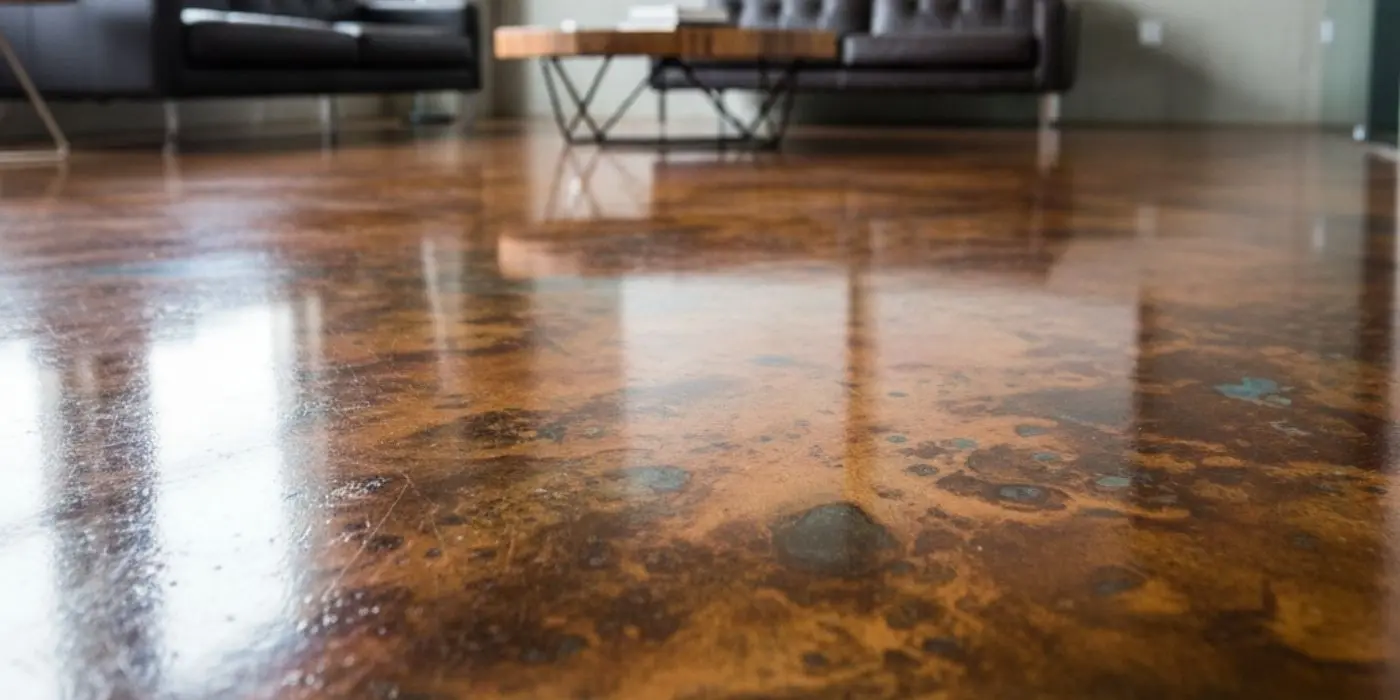
Concrete staining has become one of the most popular ways to transform ordinary concrete surfaces into stunning decorative features throughout San Diego homes and businesses. Whether you’re looking to revitalize a dull patio, upgrade your garage floor, or create an elegant indoor surface, stained concrete offers an affordable and durable solution that combines beauty with functionality.
Allied Coatings has been San Diego’s trusted partner for concrete staining and decorative finishes for over 25 years. Our experienced team specializes in transforming residential and commercial concrete surfaces with vibrant stains, professional application techniques, and long-lasting protective coatings.
Hyper-Local San Diego Staining Insights
Climate Behavior
San Diego’s coastline holds 60–80% humidity, which slows coating cure, as supported by this Science Direct review of surface treatments on concrete. Inland regions like El Cajon and Poway cure stains faster due to lower humidity and quicker moisture evaporation. Higher moisture levels along the coast also affect stain penetration and may soften final color tones.
Why It Matters for Stain Performance
Coastal projects require longer dry times to prevent blotching and uneven absorption. Inland jobs allow faster recoat timing, improving project efficiency and color consistency. Humidity directly affects chemical bonding and penetration depth, as shown in the CP Tech Center’s evaluation of penetrating sealers. Pros adjust stain load and timing based on each microclimate.
Thermal Performance Under San Diego Heat
How Heat Affects Concrete & Stains
Direct-sun concrete surfaces in East County can surpass 140°F, affecting stain performance. High heat accelerates water evaporation, which can cause uneven absorption. Temperature-based curing impacts are outlined in the CP Tech Center’s penetrating sealer research . Shaded patios stay cooler, allowing more predictable staining.
Why This Matters for Application & Color Choice
Lighter colors stay cooler—often 30–40°F lower—reducing surface temperature and heat retention. Heat-stable sealers maintain clarity in inland zones like Santee and El Cajon. Staining should be scheduled early morning or late afternoon on hot days. The Science Direct coating study supports adjusting curing practices based on thermal exposure.
What Is Concrete Staining?
Concrete staining is a specialized process that penetrates the concrete surface to create rich, translucent colors and unique visual effects. Unlike paint or coatings that sit on top of the concrete, stains react chemically with the material or penetrate deep into the pores, creating permanent color that won’t chip, peel, or fade over time.
There are two main types of concrete stains: acid-based stains that create earthy, variegated tones through chemical reactions, and water-based stains that offer a broader color palette with more consistent results. Both options provide exceptional durability and can be customized to match your design vision, whether you prefer subtle earth tones or bold, vibrant hues.
Benefits of Stained Concrete for San Diego Properties
Stained concrete is particularly well-suited to San Diego’s climate and lifestyle. The mild weather and abundant sunshine make outdoor living spaces a priority for homeowners, and stained concrete patios, pool decks, and walkways provide the perfect foundation for year-round entertainment and relaxation.
Stained concrete resists moisture, UV damage, and temperature changes while requiring minimal maintenance. Unlike wood or tile, it stays beautiful for decades with occasional cleaning and resealing.
Popular Applications for Concrete Staining
Interior Concrete Floors
Stained concrete has become a designer favorite for interior spaces, offering a sophisticated alternative to traditional flooring materials. Residential applications include living rooms, kitchens, and basements, where the seamless surface creates an open, modern aesthetic.
The versatility of concrete staining allows for endless design possibilities, from sleek monochromatic finishes to intricate patterns that mimic natural stone or tile. Many San Diego homeowners combine staining with decorative sawcuts, scoring, or stenciling to create truly custom floors that reflect their personal style.
Outdoor Patios and Entertainment Areas
San Diego’s perfect weather makes outdoor living spaces an extension of the home, and stained concrete patios provide the ideal surface for these areas. The material stays cooler than natural stone under the California sun and can be textured for slip resistance around pools and water features.
Stained concrete patios complement any architectural style, from Spanish colonial to contemporary modern. The color options range from warm terracotta and sandstone tones that echo San Diego’s natural landscape to cool grays and blues that create a sleek, sophisticated look.
Garage Floors and Workshops
Garage floors represent one of the most popular applications for concrete staining in San Diego homes. A stained and sealed garage floor transforms this utilitarian space into an attractive extension of your home while providing superior protection against oil stains, tire marks, and general wear and tear.
Professional concrete staining for garages often includes decorative flake systems or metallic finishes that hide imperfections and add visual interest. The sealed surface makes cleanup effortless, and the durable finish withstands the heavy traffic and chemical exposure common in garage environments.
The Concrete Staining Process
Surface Preparation
Proper surface preparation is critical to achieving beautiful, long-lasting results with concrete staining. The process begins with thorough cleaning to remove all dirt, grease, oils, and existing coatings that could interfere with stain penetration. This may involve pressure washing, chemical cleaning, or mechanical grinding depending on the condition of the concrete.
Cracks, spalls, and surface defects must be repaired before staining. The concrete is tested for moisture and pH to ensure optimal results, and proper preparation is key to a long-lasting finish.
Stain Application and Finishing
Once the surface is prepared, the staining process requires skill and attention to detail. Acid stains are carefully applied and allowed to react with the concrete, creating unique color variations and a natural, mottled appearance. Water-based stains are applied in controlled layers to build the desired color intensity and uniformity.
After the stain has fully dried and cured, the surface receives protective sealer coats that enhance the color depth while providing resistance to stains, moisture, and wear. Many projects include additional finishing steps like burnishing or applying decorative topcoats to achieve specific aesthetic effects or performance characteristics.
Choosing the Right Stain Colors and Finishes
Color Selection for Your Space
Selecting the perfect stain color involves considering both aesthetic preferences and practical factors. Interior spaces often benefit from neutral tones that complement existing décor and provide a versatile backdrop for furniture and accessories. Earth tones like tan, brown, and terracotta create warmth, while gray tones offer a contemporary, industrial feel.
Outdoor spaces provide more flexibility for bold color choices, though many San Diego homeowners prefer colors that harmonize with the natural surroundings. Consider how the stained concrete will look at different times of day and in various lighting conditions. Professional color consultations can help you visualize the final result and avoid costly mistakes.
Finish Options and Textures
The final appearance of stained concrete depends not just on color but also on the finish and texture. High-gloss sealers create a dramatic, reflective surface that emphasizes color depth and adds sophistication to interior spaces. Satin and matte finishes provide a more subtle look that works well in both traditional and contemporary settings.
Texture plays an important role in outdoor applications where slip resistance is essential. Broadcast aggregates, broom finishes, or stamped patterns can be incorporated before or during the staining process to enhance both safety and visual appeal. The combination of color, finish, and texture creates truly custom results tailored to your specific needs.
Why Choose Professional Concrete Staining Services
While DIY concrete staining products are available, professional installation ensures superior results and long-term performance. Experienced contractors understand the nuances of surface preparation, moisture management, and proper stain application techniques that make the difference between mediocre and exceptional outcomes.
For homeowners looking to enhance overall surface performance along with aesthetics, residential concrete staining services offer a complete solution that combines durability with customized decorative finishes.
Professional installation ensures proper safety, correct chemical handling, and compliance with regulations. It delivers better color consistency, fewer errors, warranty protection, and custom effects that DIY methods can’t match.
Transform Your Space with Allied Coatings
Ready to enhance your San Diego property with beautiful, durable concrete staining? Allied Coatings brings over 25 years of expertise to every project, delivering professional results that exceed expectations. Our experienced team serves homeowners and businesses throughout San Diego County, from coastal communities to inland areas.
We offer free estimates and professional consultations to help you explore your options and design the perfect stained concrete solution for your space. Whether you’re planning a small patio refresh or a large-scale commercial project, we’re committed to quality craftsmanship and customer satisfaction.
Contact Allied Coatings Today
For a free estimate or professional consultation, call us at (800) 630-2375, email sa***@************gs.com, or visit us at 795 North Ave. #D, Vista, CA 92083. Explore our gallery of completed projects to see the possibilities for your home or business, and discover why San Diego residents have trusted Allied Coatings for over two decades.
FAQs
How long does concrete staining last?
Stained concrete can last 20+ years with proper maintenance. The stain is permanent, but the sealer should be reapplied every 2–5 years depending on traffic and exposure. Indoor surfaces require less frequent maintenance than outdoor areas.
Can existing concrete be stained?
Yes, existing concrete can be stained if it’s structurally sound. Minor repairs and surface prep ensure optimal adhesion and appearance.
Is stained concrete slippery when wet?
Slip resistance depends on texture and sealer. Anti-slip additives or textured finishes can improve safety, especially near pools or wet areas.
What’s the difference between acid stain and water-based stain?
Acid stains produce earthy, variegated tones, while water-based stains offer a wider color palette and more uniform results. Both are durable and permanent.
How do I maintain stained concrete floors?
Sweep or dust mop regularly, and damp mop occasionally with a pH-neutral cleaner. Avoid harsh chemicals. Reseal every 2–5 years as needed.
Can concrete staining cover stains and imperfections?
Staining can mask minor flaws, but major damage may require repair or resurfacing before staining. Acid stains naturally help blend small imperfections.