
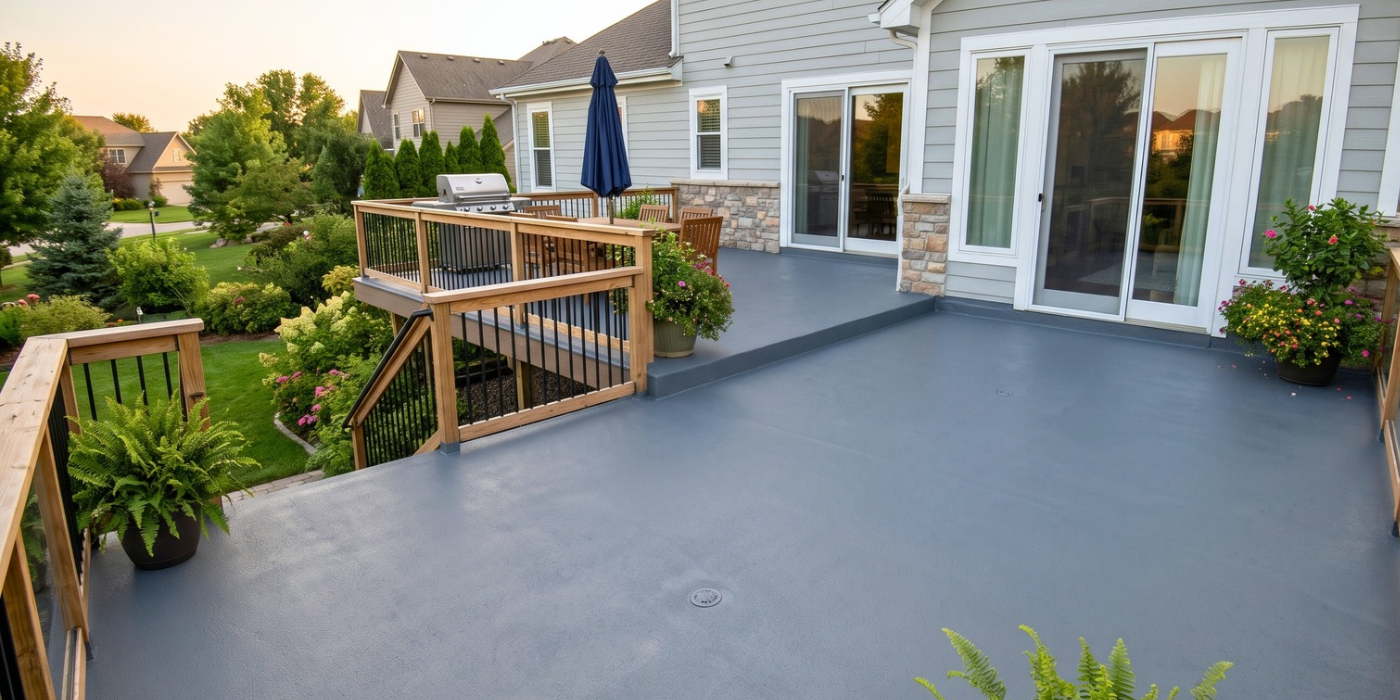
Deck waterproofing in San Diego usually comes up after someone notices a brown stain on the ceiling below a balcony, or a soft spot near the door that wasn’t there last year. Both point to the same problem: water has gotten past the deck surface and is reaching the wood underneath. Once that happens, every rain and every damp marine layer morning adds to damage that stays hidden until it’s expensive.
Allied Coatings waterproofs decks, balconies, and walkways across San Diego County from its facility in Vista, working with homeowners, apartment owners, and HOAs. Its waterproof decking systems protect both plywood and concrete decks and seal the transitions where most leaks start. If your deck is already leaking, a free estimate begins with finding exactly where the water is getting in, not just coating over the stain.

Why San Diego Decks Leak
San Diego’s climate is mild, but it’s hard on deck coatings in ways that don’t always show up right away. Coastal properties sit in salt air and frequent morning moisture, which keeps surfaces damp longer and carries chlorides that break down lower grade coatings over time. Inland, in communities like Escondido and El Cajon, the stress comes from strong sun and wider daily temperature swings.
Both conditions attack the same weak points. Decks fail first at transitions: railing posts, door thresholds, drains, and the joint where the deck meets the building wall. These spots move with heat and cold at a different rate than the deck surface, so a coating or sealant that can’t flex with them eventually cracks. Because San Diego gets few rainy days, small leaks at these joints can go unnoticed through several winters.
Signs Your Deck Is Leaking
Most deck leaks show up underneath or beside the deck before they show up on the surface. Checking these spots once or twice a year catches problems while they’re still small.
The clearest warning is staining, peeling paint, or white mineral deposits (efflorescence) on the ceiling or wall directly below a deck. On the deck itself, watch for cracking or bubbling in the coating, gaps where the surface meets the wall, and water that stays pooled long after rain. Rust streaks at railing posts suggest water is tracking into the post penetrations.
Soft or spongy areas underfoot deserve the fastest response. Wood that gives when you step on it is usually already wet, and that moves the job from a coating repair toward a framing repair.
How Do Contractors Find a Deck Leak Before Waterproofing?
Finding the source of a deck leak requires more than identifying a water stain. Moisture can travel along framing, flashing, or the underside of a waterproofing membrane before becoming visible. A stain beneath a balcony may originate several feet from the actual entry point.
A leak detection paper published by the International Institute of Building Enclosure Consultants (IIBEC) notes that no single test finds every leak, so professionals combine methods based on the waterproofing system, substrate, and suspected failure.
| Diagnostic method | What it helps determine |
| Visual inspection | Cracked coatings, failed sealants, blocked drains, and damaged flashing |
| Moisture mapping | Areas of suspected moisture beneath or around deck finishes |
| Controlled hose testing | Whether railing posts, door thresholds, or wall transitions admit water |
| Electronic leak detection | Potential breaches in compatible waterproofing membranes |
| Flood testing | Whether a suitable horizontal waterproofing installation remains watertight |
For example, a San Diego homeowner might notice ceiling stains beneath a second story balcony. A contractor could first inspect the sliding door threshold and railing penetrations, then use controlled water testing to isolate the suspected entry point.
Not every testing method is appropriate for every deck. Electronic leak detection depends on a conductive substrate beneath the membrane, which limits its use on many plywood decks. Flood testing adds substantial weight: the IIBEC paper describes holding 1 to 4 inches of water for 24 to 72 hours, and every inch of standing water adds roughly 5 pounds per square foot. That’s why it should not be performed without confirming structural capacity, particularly when plywood or framing may be deteriorated. ASTM D5957 provides guidance for flood testing horizontal waterproofing installations.
Accurate diagnosis helps determine whether localized resealing, complete membrane replacement, or structural repairs are necessary. Identifying the actual failure before applying another coating reduces the risk of concealing damage and repeating the same leak.
Leak Repair or Full Waterproofing: Which Does Your Deck Need?
Not every leaking deck needs a full tear off. Once the source is confirmed, the right repair depends on how far the water has traveled and what condition the wood is in.
Targeted Leak Repair at Transitions
When the coating is in good shape overall but has failed at a few joints, the fix can focus on those points. Old sealant is removed, the joint is cleaned and prepared, and the transition is resealed with material rated for the movement and exposure it sees. Allied Coatings also provides commercial caulking for wall joints, window frames, and penetrations on multifamily and commercial buildings, where many deck leaks begin.
Recoating a Worn Deck Surface
If the coating is thin, chalky, or cracked across the deck but the plywood beneath is sound, a properly prepared recoat restores the waterproofing before water reaches the framing. This is the most cost effective point to act.
New Waterproofing After Framing Repair
When rot has reached the plywood or joists, the damaged wood has to be replaced before any coating goes back on. Coating over soft or rotted wood hides the damage without stopping it. Once the substrate is repaired, a new waterproofing system is applied and sealed at every post, drain, and wall connection.
How Allied Coatings Waterproofs San Diego Decks
Allied Coatings’ waterproof decking systems go on at less than a quarter inch thick. That protects plywood and concrete decks without raising the surface enough to interfere with door thresholds or existing railing heights, which matters on retrofits where those heights are already fixed.
The coatings are UV resistant, so San Diego sun doesn’t break them down the way it does with unprotected wood or basic sealers. They also dry fast, so most decks return to use within a day or two instead of sitting closed for a week.
Homes and Single Family Decks
Homeowners usually call about one deck or balcony, often after a leak shows up in a room below. The process starts with locating the leak, addressing any damaged substrate, and applying a waterproofing system with a finish suited to the home.
Apartments, Condos, and HOAs
Multifamily properties in San Diego fall under the same state balcony laws as the rest of California. SB 721 requires inspections of wood supported balconies, decks, and walkways more than six feet above grade on rental buildings with three or more units, with reinspection every six years. SB 326 applies a similar requirement to condominium associations on a nine year cycle. Both laws treat waterproofing elements such as coatings, membranes, flashings, and sealants as part of what inspectors evaluate.
Allied Coatings’ commercial waterproof decking coatings are CBO/ICC evaluated and carry a Class A fire rating, a one hour fire rating, and ADA approval. Those ratings matter when repair work tied to an inspection report goes through permitting and review.
What Affects the Cost of Deck Waterproofing in San Diego
The biggest cost factor is what’s under the surface. A deck that needs only a recoat or a few resealed transitions costs far less than one with rotted plywood or joists that must be replaced first. That’s why two decks of the same size can carry very different estimates.
Deck size, access, and the number of penetrations also affect pricing. A ground level deck with open access is simpler to prepare than a third floor balcony that needs scaffolding, and a deck with many railing posts and drains has more transitions to seal. Multifamily properties often reduce per deck costs by scheduling several decks in one project, since setup is shared across the work.
Keeping a Deck Watertight for the Long Term
Lifetime protection comes from a sound system and steady upkeep, not from a coating alone. Keep drains and scuppers clear so water doesn’t pool, and sweep off sand and grit, which wear down the surface faster on coastal properties. Check railing posts, door thresholds, and wall joints at least once a year, and reseal any transition that has started to separate before the next rainy season. For multifamily properties, lining up maintenance with the SB 721 or SB 326 inspection schedule keeps the work predictable.
Why San Diego Property Owners Choose Allied Coatings
Allied Coatings is based in Vista and has served San Diego, Orange, and Los Angeles Counties for more than 40 combined years. Its waterproof decking systems are CBO/ICC evaluated and rated for the fire and accessibility standards that multifamily and commercial buildings must meet, with systems suited to both homes and larger properties.
If your deck is leaking, showing cracks at the transitions, or due for its next inspection, Allied Coatings can help trace the source of the water and recommend the right repair, from targeted resealing to a full waterproofing system. Call (800) 630-2375, email sales@alliedcoatings.com, or contact the team to schedule a site visit.
FAQs
How do I know if my deck is leaking?
The most reliable sign is staining, peeling paint, or white mineral deposits on the ceiling or wall below the deck. Cracks in the coating, gaps at the wall, pooled water, and rust at railing posts are other common warning signs.
Can a leaking deck be repaired without replacing it?
Often, yes. If the plywood and framing are still sound, resealing failed transitions or recoating the surface can stop the leak. Decks with soft or rotted wood need those sections replaced before new waterproofing is applied.
How long does deck waterproofing take?
Most single decks or balconies can be coated in a day or two because the systems dry quickly. Projects that include framing repair or several decks on a multifamily property take longer and are usually phased.
Does SB 721 apply to my San Diego property?
SB 721 applies to rental buildings with three or more units that have wood supported balconies, decks, or walkways more than six feet above grade. Condominium associations fall under SB 326 instead, and single family homes are not covered by either law.
Can waterproofing be applied to both wood and concrete decks?
Yes. Allied Coatings’ waterproof decking systems are designed for both plywood and concrete substrates, with surface preparation adjusted to each material.
Is deck waterproofing affected by living near the coast?
Yes. Salt air and frequent morning moisture keep coastal decks damp longer and wear down lower grade coatings faster. UV resistant systems and regular resealing at transitions help coastal decks hold up.