
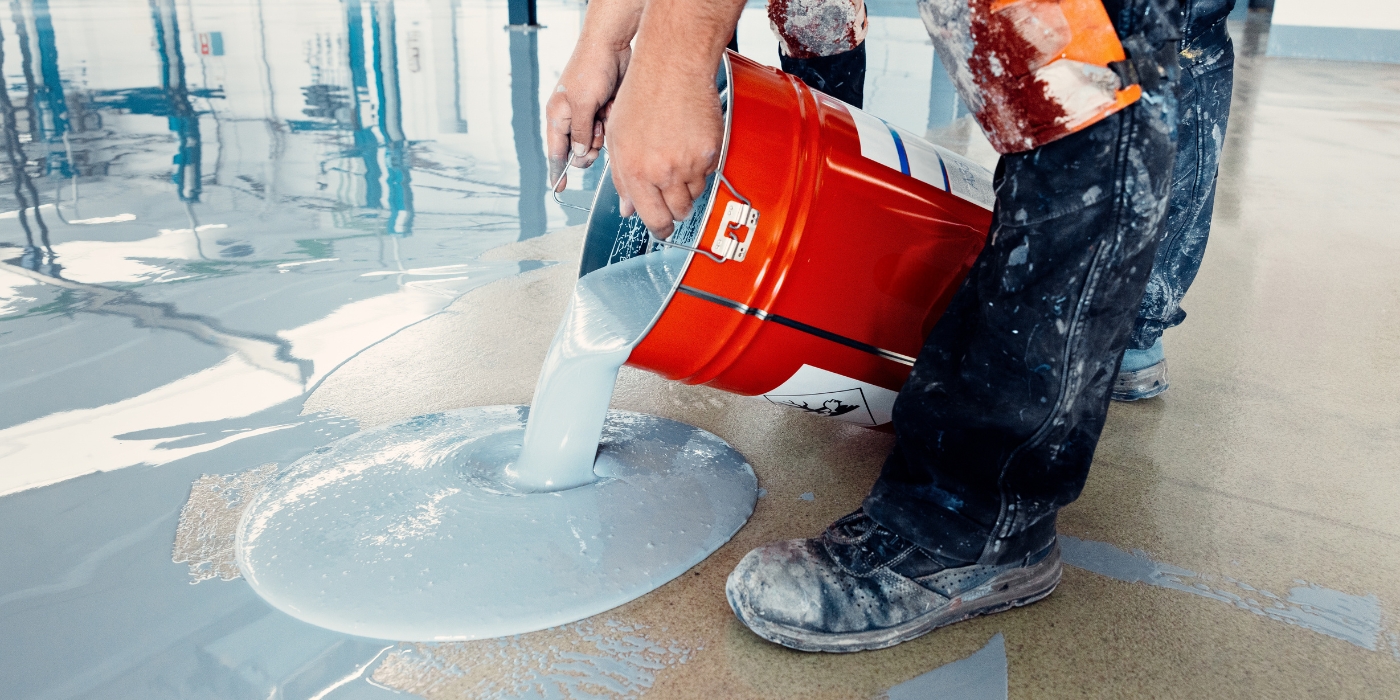
Epoxy flooring puts a seamless, chemical-resistant surface over a bare concrete slab, bonded on in layers that cure into one continuous sheet. A proper epoxy system shrugs off the oil, solvents, dropped tools, and hot tires that would eat through paint or bare concrete within a season. The catch is that the word “epoxy” covers everything from a two-coat professional system to a one-can hardware-store kit, and the two do not deliver the same results.
Allied Coatings has installed epoxy and resinous floors across Southern California for more than 25 years, in Glendale auto shops, warehouses, restaurant kitchens, medical suites, and home garages. Every floor starts with the concrete underneath, because a coating is only as tough as its bond to the slab, and that bond is made or lost in the prep.
What Makes Epoxy “Seamless and Tough”
Epoxy goes down as a liquid and cures into a single bonded surface, so a finished floor has no tile joints, no grout lines, and no seams where dirt, water, or bacteria can work in. That allows such floors to be wiped clean in one pass and it’s why health inspectors recommend it for kitchens and medical spaces. The whole floor is one surface, edge to edge, sealed to the slab.
The toughness comes from the cured resin. A proper epoxy resists the oil, gasoline, brake fluid, solvents, and cleaning chemicals that stain or soften lesser floors, which is why auto bays and warehouses run it. Spills sit on top and wipe away rather than soaking in, and the surface holds its finish through washdowns that would strip a painted floor.
These floors are fit for both chemical and physical challenges. A cured epoxy system takes the abrasion of foot and forklift traffic, the impact of a dropped wrench, and the point load of a loaded pallet jack without chipping or wearing through. The harder the topcoat and the thicker the build, the more of that it absorbs before it ever shows.
Why a Premium System Outlasts a One-Coat Coating
A premium epoxy floor is built in layers A penetrating primer soaks into the slab and locks the system to the concrete, a high-build base coat carries the strength and the color, and a hard topcoat adds the chemical, abrasion, and UV resistance on top. Each layer does a job the others cannot, which is what separates a floor measured in tens of mils from a coat of paint measured in ones.
Thickness makes the difference. A professional system uses high-solids epoxy that keeps its full build after curing, laid over concrete that has been diamond-ground so the resin bites into an open surface instead of sitting on a sealed one.
A thin, single-coat kit rolled over a lightly etched floor has too little material and too weak a bond to survive continuous use, and it starts lifting within a year or two. A slab too spalled or cracked to hold a coating gets resurfaced first, so the epoxy has a solid concrete foundation to bond to.
Hot-tire pickup is one of the most glaring weak spots of cheap coatings, especially in a Glendale garage that bakes through the summer. A hot tire parked on a thin or poorly bonded coating pulls it up off the slab as the rubber cools and grips. A fully bonded epoxy system with a hard topcoat stays put under the same hot tire, which more than justifies going the extra mile.
Where Glendale Puts Epoxy to Work
Commercial epoxy flooring fits the Glendale floors that see most traffic. An auto service center off San Fernando Road needs a floor that takes oil and hot tires, a warehouse needs one that survives forklifts and pallet loads, and a restaurant or medical suite needs a seamless surface that passes inspection and cleans fast. We match the system build to the specific traffic and chemicals the space will be met with.
In homes, epoxy turns a garage into a clean, sealed floor that stops soaking up oil drips and tire marks and holds up to the heat off a parked car. The look is yours to set, from a plain solid color to a decorative flake blend or a metallic finish with real depth, and a slip-resistant additive goes into any of them where a floor gets wet. The finish rides on top of the same tough system underneath.
Why Glendale Property Owners Call Allied Coatings
Allied Coatings has coated concrete floors across Glendale and the rest of Southern California for more than 25 years. We build with epoxy and urethane systems from manufacturers like Sika and Tennant, and we grind and test the slab before quoting, since the prep and the system have to match the way the floor will be used. From a two-car garage to an industrial plant floor, every job starts with the concrete and the traffic it has to carry.
A tough floor starts with the slab you already have. Whether it is a garage that bakes in the summer, an auto bay, or a warehouse that has to survive daily forklift traffic, Allied Coatings can assess the concrete and put together a free estimate for a system built to last. Contact us today to get started.
Frequently Asked Questions
What makes an epoxy floor seamless, and why does it matter?
An epoxy floor is seamless because it is applied as a liquid that cures into one continuous surface, with no tile joints or grout lines running through it. That matters most where cleanliness counts, since there are no seams for dirt, water, or bacteria to collect in, and the whole floor wipes clean in a single pass. It also means no grout to scrub, crack, or discolor over time.
Will an epoxy floor hold up in an auto shop or warehouse?
A professionally built epoxy floor is made for exactly that kind of use, resisting oil, solvents, and brake fluid along with the abrasion of forklift traffic and the impact of dropped tools. The system build is matched to the load, with thicker, harder layers for heavy industrial floors. Spills wipe up instead of soaking in, and the floor holds its finish through regular washdowns.
What is hot-tire pickup, and does a professional epoxy floor resist it?
Hot-tire pickup happens when a warm tire parks on a coating and pulls it off the slab as the rubber cools and grips, and it is the most common way cheap garage coatings fail. A properly bonded, high-solids epoxy system with a hard topcoat stays put under hot tires because it is fully keyed into a diamond-ground slab. This is a real concern in Glendale garages that heat up through the summer.
How is a professional epoxy floor different from a store-bought kit?
A professional epoxy floor is a multi-coat system, a penetrating primer, a high-build base, and a hard topcoat, laid over concrete that has been diamond-ground for a strong bond. A store-bought kit is usually a single thin coat rolled over an etched floor, with too little material and too weak a bond to last, which is why those floors often peel within a year or two. The difference shows up in the total thickness and in how long the floor survives real traffic.
Does epoxy work for commercial kitchens or medical spaces?
Epoxy is a strong fit for kitchens, medical suites, and other spaces with strict cleanliness rules, because the seamless surface has no grout lines for grime or bacteria to hide in. Chemical-resistant systems stand up to grease, cleaning agents, and frequent washdowns, and many meet the sanitary requirements those facilities are held to. An integral cove base can carry the coating up the wall so the floor-to-wall joint cleans just as easily.