
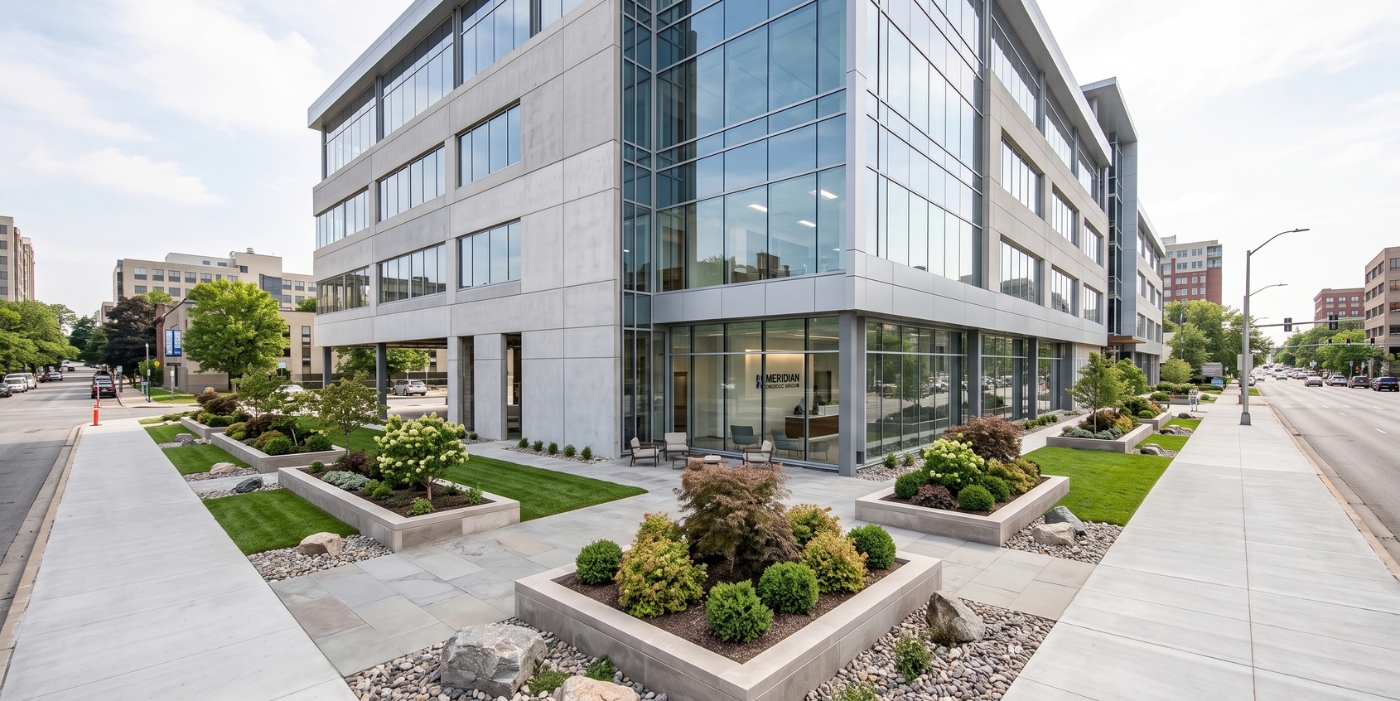
Foundation waterproofing in Los Angeles protects the one part of a commercial building that was never designed to get wet. A hairline crack in a foundation wall or a damp patch near a slab does not stay small for long. Once water finds a way into a foundation, it keeps finding that same path with every rainy season, widening cracks and undermining the structure above.
Property managers running retail centers, office buildings, and parking structures across Los Angeles County face this problem more often than most people realize, because the region’s mix of clay, loam, and sand soils responds to moisture in unpredictable ways. Allied Coatings has built foundation walls, slabs-on-grade, elevator pits, and sump systems for commercial below grade waterproofing projects across the county for more than 40 combined years, using materials suited to new construction and older retrofits alike. Property managers who catch water intrusion during a routine walkthrough can usually resolve it with a single below grade waterproofing project. Once that water reaches finished tenant space, the repair bill grows considerably.
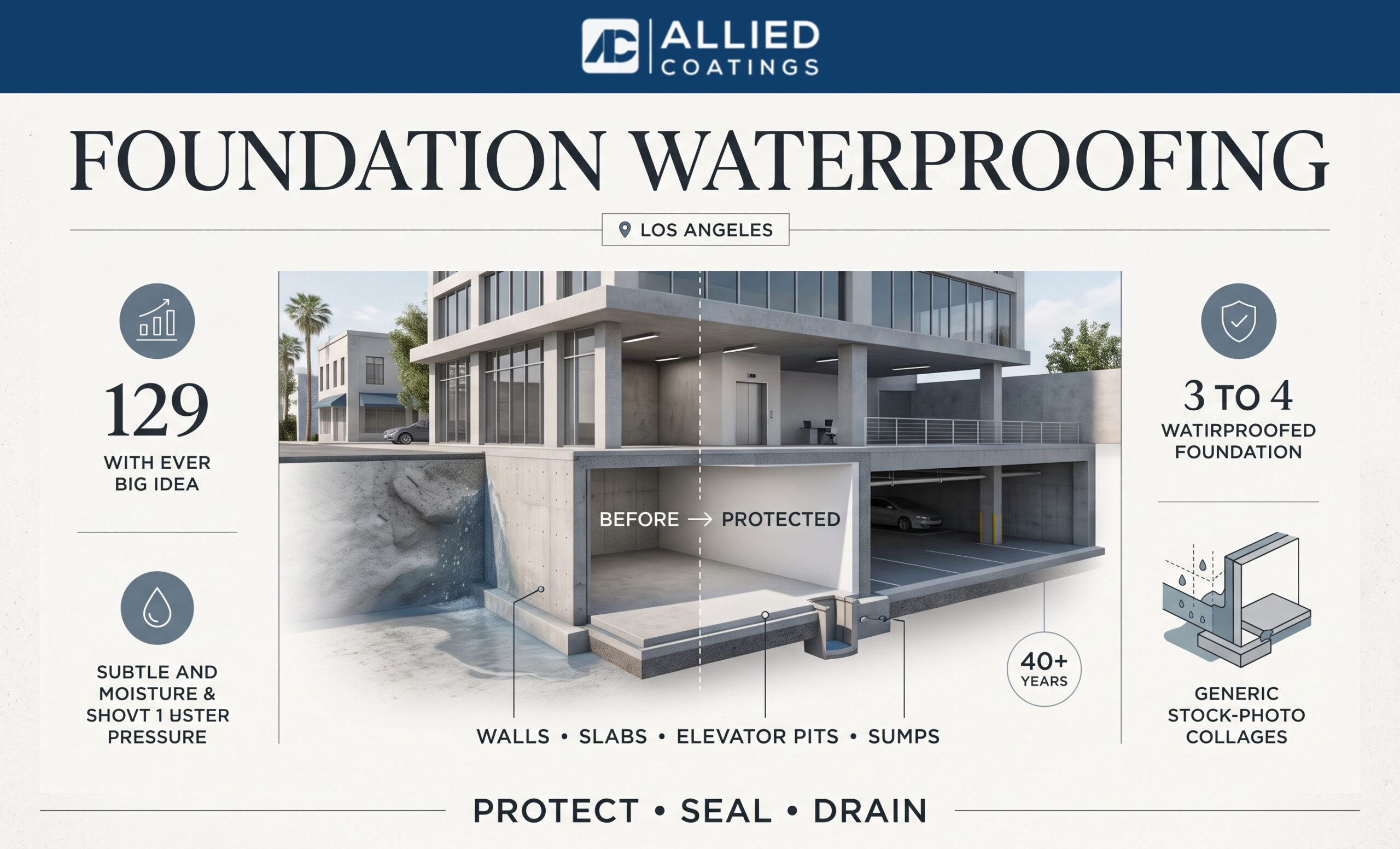
Why Los Angeles Foundations Take on Water
Los Angeles sits on a patchwork of soil types, and that variety is part of the problem. Clay soils swell when they absorb moisture and shrink as they dry, while loam and sand nearby barely react at all. When a single foundation spans more than one soil type, each section moves at a different rate, and that differential movement is what opens the cracks water uses to get in.
Geotechnical engineers point to the California Geological Survey’s expansive soil maps for exactly this reason, since montmorillonite clay, the type responsible for the most severe swelling, appears throughout large sections of Southern California. A building constructed decades ago, before waterproofing standards caught up with what engineers now understand about local soil behavior, is often the one calling in a leak after the first heavy winter storm.
Where Water Gets In
Water intrusion rarely announces itself with a flood. It shows up as small, easy-to-miss signals long before a basement or parking level floods outright.
- Foundation walls: hairline cracks, efflorescence (the chalky white mineral deposits left behind as water evaporates), and cool, damp patches on interior wall surfaces.
- Slabs-on-grade: rising moisture that lifts flooring adhesives, discolors concrete, or produces a persistent musty smell in ground-floor units.
- Elevator pits: standing water at the base of the shaft, which can trip safety sensors and force elevators out of service.
- Sump areas: a sump pump running constantly, or failing outright during a storm because it was never sized for the volume it’s handling.
Each of these locations calls for a different waterproofing detail, which is why a proper assessment starts with identifying exactly where the water is entering rather than coating the first visible crack.
How Commercial Foundation Waterproofing Works
Allied Coatings builds below grade systems around high-performance acrylic admixtures, a proprietary blend of cement and aggregates, specialty sealers, and commercial-grade epoxies, matched to the specific wall, slab, or pit being protected. As an approved installer for manufacturers including Sika and Koster, two names geotechnical and waterproofing engineers recognize for below-grade systems, the company has access to formulations built specifically for structures under hydrostatic pressure rather than general-purpose sealers.
New construction projects get waterproofing applied before the foundation is backfilled, which is the least expensive point in a building’s life to do this work. Retrofits on occupied buildings are different: they typically rely on interior injection and sealing systems that don’t require excavating around an active structure, so tenants and operations are not disrupted for weeks at a time.
New Construction
Waterproofing membranes and coatings go on while the foundation is still exposed, before backfill goes back into the excavation. This is the cheapest and most thorough point to address moisture protection, because every surface is fully accessible.
Retrofit and Existing Buildings
Older buildings usually need targeted repairs: epoxy or polyurethane injection into active cracks, interior sealant systems, and sump or drainage corrections that address a specific point of failure rather than the entire foundation.
What Happens When It Goes Unaddressed
Untreated water intrusion does more than stain a wall. It corrodes rebar inside the concrete, which expands as it rusts and cracks the surrounding material from the inside. Mold takes hold in humid basements and mechanical rooms, creating tenant complaints and potential liability. Parking structures with standing water develop slip hazards, and a foundation that keeps moving eventually threatens the structural elements everything else in the building depends on.
None of these problems get cheaper by waiting. A crack that costs a few thousand dollars to seal this year can turn into a structural repair costing tens of thousands once water has been working on it for a few rainy seasons.
If your building is already showing signs of water intrusion, from an estimate request to a completed installation, Allied Coatings can generally have a below grade waterproofing plan in place within days of an initial site visit. Get in touch through the contact page to have a technician assess your specific situation.
Why Los Angeles Businesses Call Allied Coatings
Allied Coatings has completed below grade waterproofing work for thousands of commercial customers across Los Angeles, Orange, and San Diego Counties, and every project starts with an assessment of the building’s specific soil conditions, construction type, and water intrusion pattern rather than a standard package applied to every job. That approach, paired with more than 40 combined years of field experience, is why property managers across Southern California return to the same waterproofing contractor project after project.
If your building is dealing with water intrusion, or you want it addressed before it becomes a problem, Allied Coatings offers free estimates for commercial below grade waterproofing throughout Los Angeles County. Contact us today to begin waterproofing your business.
FAQs
How much does commercial foundation waterproofing cost in Los Angeles?
Cost depends on the size of the affected area, the waterproofing method required, and whether the work is new construction or a retrofit on an occupied building. Interior injection repairs on a single crack cost far less than a full below grade membrane system on a large commercial foundation, and Allied Coatings provides a written estimate after assessing the specific site.
Can foundation waterproofing be done without excavation?
Yes. Interior methods like epoxy or polyurethane crack injection, sealant systems, and sump corrections address water intrusion from inside the building, which is why most occupied commercial properties in Los Angeles use these approaches instead of exterior excavation.
How long does a commercial foundation waterproofing project take?
Most retrofit projects on a single foundation wall, slab area, or elevator pit are completed in a few days. Larger new-construction waterproofing scopes take longer, since the work is coordinated around the broader construction schedule.
What is the difference between waterproofing and damp proofing?
Damp proofing resists moisture vapor but is not rated to hold back standing water or hydrostatic pressure, while true waterproofing systems, like the ones used in below grade commercial applications, are designed to block liquid water even when the ground around a foundation is saturated. A building sitting in an area with a high water table needs waterproofing, not damp proofing.
Does foundation waterproofing work on older commercial buildings?
Yes, and it is often more urgent for older buildings, since many were built before current waterproofing standards existed. Allied Coatings assesses the specific construction and soil conditions of each older property to determine which repair method will hold up best.
How deep does the active zone of expansive soil extend around Los Angeles foundations?
The active zone, the depth at which expansive clay soils shrink and swell with seasonal moisture changes, typically extends around 18 feet below grade in Southern California. That depth is why differential soil movement can affect even foundations that appear structurally sound at the surface.