
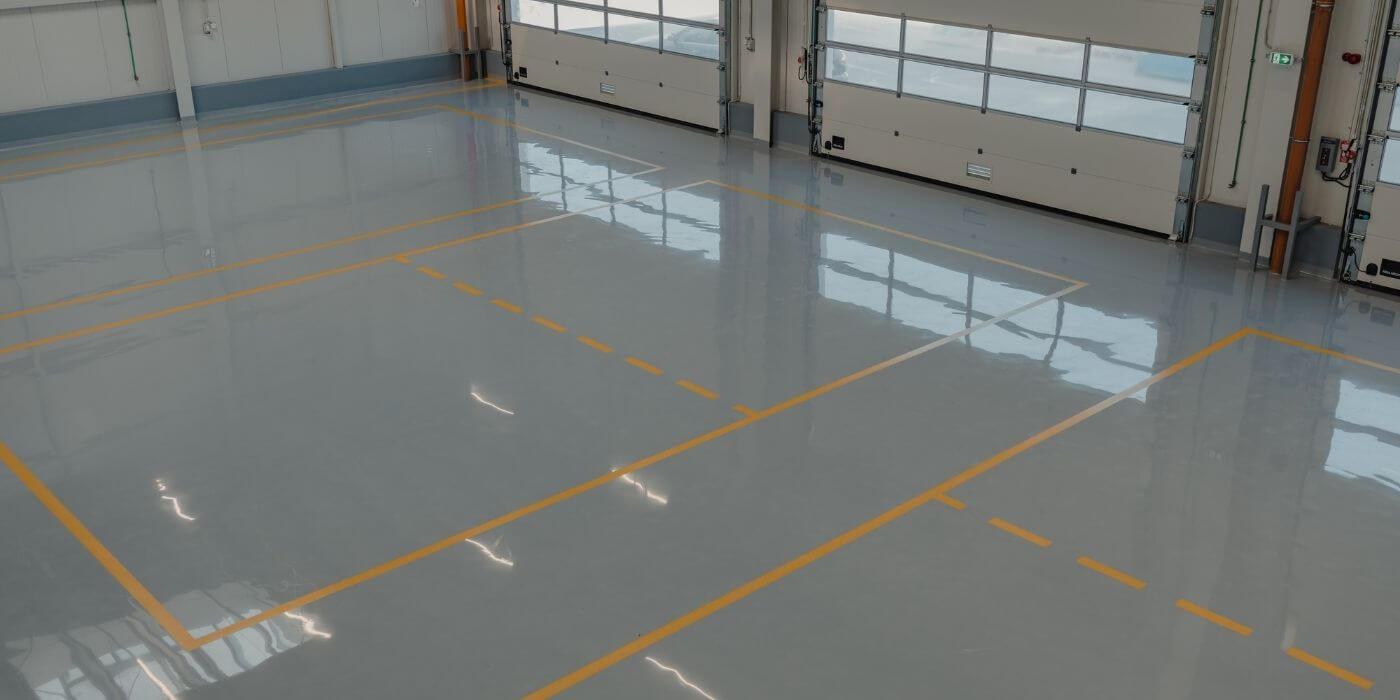
Your garage floor endures constant stress from vehicle traffic, oil spills, chemical exposure, and temperature fluctuations. Standard concrete simply isn’t equipped to handle these challenges long-term, which is why San Diego homeowners are increasingly turning to professional epoxy flooring solutions. Allied Coatings has served Southern California for over 25 years, specializing in high-performance epoxy installations that transform ordinary garage floors into durable, attractive surfaces built to last.
Epoxy flooring protects concrete while enhancing your garage’s appearance. Unlike paint or sealers, it chemically bonds to the substrate, creating a durable, stain- and impact-resistant surface — the gold standard for long-lasting garage upgrades in San Diego.
Why Choose Epoxy Flooring for Your San Diego Garage?
Epoxy coatings deliver superior performance compared to bare concrete or painted surfaces. The thick, seamless layer protects against moisture penetration, prevents concrete dusting, and creates a non-porous surface that resists oil, gasoline, and household chemicals.
Beyond protection, epoxy flooring improves your garage’s look and usability. Its glossy finish reflects light, brightening the space and making dropped tools easier to see. Many homeowners find their epoxy-coated garage becomes an extension of their home, perfect for workshops, gyms, or organized storage.
Understanding Epoxy Coating Systems
Professional epoxy systems use two-part formulations that chemically react to form a hard, durable finish. The resin and hardener bond at the molecular level, creating a coating much stronger than single-part “epoxy paints.”
Epoxy thickness and composition can be customized for your garage, typically 10–20 mils for residential spaces and over 60 mils for commercial use. Professional installers assess concrete condition, traffic, and intended use to recommend the optimal system.
The Importance of Slip Resistance
Slip resistance is a critical safety consideration for garage floors, especially when wet from rain, snow melt, or cleaning. Epoxy coatings can be formulated with varying levels of texture to provide traction without compromising the smooth, seamless appearance. Broadcast aggregate systems incorporate decorative chips or quartz particles that create a textured surface while adding visual appeal.
The coefficient of friction can be adjusted during installation by controlling the type and density of aggregate materials. Fine aluminum oxide or polymer granules provide subtle texture for light-duty applications, while coarser materials deliver aggressive slip resistance for areas exposed to water or automotive fluids.
Surface Preparation: The Foundation of Success
Proper surface preparation determines the longevity and performance of any epoxy installation. The concrete must be thoroughly cleaned, profiled, and repaired before coating application. Allied Coatings employs diamond grinding and shot blasting techniques to open the concrete’s pores, ensuring maximum mechanical bonding between the substrate and epoxy system.
Existing coatings, sealers, oils, and contaminants must be completely removed to achieve proper adhesion. Cracks and spalled areas require filling with specialized epoxy patching compounds that cure to match the surrounding concrete’s strength. Moisture testing is also essential, as excessive vapor transmission can cause coating delamination.
Color and Design Options
Modern epoxy systems offer nearly unlimited color and design options. Solid colors create clean, contemporary looks, while multi-color chips hide imperfections and add depth. Metallic epoxies mimic polished marble or granite, turning garages into showpiece spaces.
Custom logos, patterns, and borders can be added with tapes, stencils, or multiple colors. Many San Diego homeowners match floor colors to their vehicles or home exterior. Epoxy’s design flexibility allows finishes from subtle and professional to bold and personalized.
Installation Process and Timeline
Professional epoxy installation typically requires two to four days depending on the coating system complexity and garage size. Day one focuses on surface preparation, including grinding, crack repair, and cleaning. The concrete must then cure and dry completely before coating application, which may extend the timeline in humid conditions or for newly poured slabs.
Base coats are applied once the surface is prepared and dry, with decorative chips added for texture and visual appeal. After curing, top coats provide UV protection, chemical resistance, and a glossy or satin finish. Allied Coatings’ installers coordinate each step to ensure proper curing and minimal disruption.
Durability and Longevity Expectations
Professional epoxy flooring typically lasts 15–25 years in residential garages, depending on traffic, maintenance, and chemical exposure. Commercial spaces with heavy use may need recoating every 10–15 years, while lightly used garages can exceed two decades.
The initial investment pays off with lower maintenance and longer concrete life. Epoxy protects against moisture, freeze-thaw damage, and chemicals, often outlasting the average period of homeownership and providing lasting value.
Maintenance and Care Requirements
Epoxy floors require minimal maintenance to retain their appearance and performance. Regular sweeping or dust mopping removes abrasive dirt particles that could dull the finish over time. For deeper cleaning, mild detergents mixed with warm water effectively remove most stains and spills without damaging the coating.
Avoid using harsh solvents, acidic cleaners, or abrasive scrubbing pads that could compromise the epoxy surface. Hot tire pickup, which occurs when tires soften in extreme heat and adhere to the coating, can be minimized by allowing vehicles to cool before parking or selecting specialized epoxy formulations designed for high-temperature resistance.
Cost Considerations and Value
Epoxy flooring installation costs vary based on garage size, surface condition, and system complexity. Surface preparation requirements significantly impact the final cost, as heavily damaged concrete demands more extensive repair work.
When comparing costs, epoxy offers better long-term value than alternatives. Painted floors need recoating every 2–3 years, often costing as much over a decade and performing worse. Epoxy’s durability, chemical resistance, and appearance provide a superior return, especially for long-term homeowners or those boosting resale value.
Environmental and Health Considerations
Modern epoxy formulations have evolved to reduce volatile organic compound (VOC) emissions and environmental impact. Low-VOC and solvent-free options provide the same performance characteristics as traditional products while improving air quality during installation and curing. Allied Coatings uses environmentally responsible products that meet or exceed California’s stringent air quality regulations, including South Coast AQMD standards for architectural coatings.
Proper ventilation is important during installation and curing. Most epoxy systems cure fully within seven days, then emit negligible fumes. Once cured, epoxy forms a non-porous surface that resists mold, mildew, and dust mites, improving indoor air quality compared to bare concrete or carpeted floors.
Common Applications Beyond Standard Garages
While residential garages represent the most common application, epoxy flooring excels in numerous other settings. Auto showrooms rely on high-gloss epoxy to showcase vehicles under optimal lighting conditions. Home workshops benefit from chemical-resistant surfaces that withstand solvents, paints, and woodworking debris without staining or damage.
Manufacturing facilities, aircraft hangars, and commercial warehouses specify epoxy for its ability to handle heavy machinery, forklift traffic, and constant use. Medical facilities appreciate epoxy’s seamless, easy-to-sanitize surface that meets strict hygiene requirements.
Climate Considerations for San Diego Installations
San Diego’s Mediterranean climate is ideal for epoxy installation most of the year. Moderate temperatures and low humidity support proper curing, though summer heat or coastal humidity may require adjusted techniques and additional moisture testing.
Stable temperatures are crucial during curing, as extremes can affect the chemical reaction and coating quality. Professional installers monitor conditions to stay within manufacturer specifications, and San Diego’s stable climate reduces weather-related delays.
Professional Installation vs. DIY Approaches
DIY epoxy kits may seem cost-effective but rarely match professional results. They often use lower-quality resins, provide limited surface prep instructions, and lack technical support, leading to common failures like poor adhesion or improper mixing.
Professional installers use specialized equipment, expertise, and warranties that DIY kits can’t match. With over 25 years of experience, Allied Coatings ensures proper surface preparation and flawless epoxy application, solving challenges that DIY projects cannot replicate.
Ready to Transform Your San Diego Garage?
Allied Coatings stands ready to upgrade your garage with professional epoxy flooring that delivers lasting beauty and performance. Our experienced team serves homeowners and businesses throughout San Diego County, Orange County, Los Angeles County, and all of Southern California. With years of industry expertise, we specialize in installations that exceed expectations.
Contact Allied Coatings today for a free estimate on your garage flooring project. Call us at (800) 630-2375 or visit our facility at 795 North Ave. #D, Vista, CA 92083. You can also reach us via email at sa***@************gs.com. Let our certified installers show you why thousands of satisfied customers have trusted Allied Coatings for their concrete coating needs.
FAQs
How long does epoxy flooring installation take?
Residential epoxy garage installations usually take 2–4 days. Day one covers surface preparation, followed by base coats, decorative elements, and top coats. Curing time depends on temperature and humidity, with full vehicle use typically allowed after 72 hours.
Can epoxy be applied over existing garage floor coatings?
Epoxy should be applied only to bare concrete, as existing paints or sealers prevent proper bonding and can cause delamination. Professionals remove old coatings via grinding or shot blasting to ensure maximum adhesion.
Will epoxy flooring work in garages with moisture issues?
Excessive concrete moisture can cause epoxy to bubble or delaminate. Professionals test vapor levels and, if needed, install vapor barriers or moisture-mitigating primers before coating.
How do I maintain my epoxy garage floor?
Maintenance is simple: sweep or dust mop regularly, and clean deeper with mild detergent and warm water. Avoid harsh chemicals or abrasive tools, and quickly wipe up spills, though properly installed epoxy resists most garage contaminants.
Is epoxy flooring slippery when wet?
Smooth epoxy can be slippery when wet, but slip resistance can be added during installation. Decorative chips or quartz particles provide traction, with texture customized from subtle to aggressive depending on your needs.
What’s the difference between epoxy and epoxy paint?
True epoxy consists of two-part systems where resin and hardener chemically react to form an extremely durable coating. Epoxy paint is a single-part product that contains some epoxy resins mixed with latex or acrylic binders. While epoxy paint is cheaper and easier to apply, it lacks the durability, chemical resistance, and adhesion properties of professional two-part epoxy systems.
How much does professional epoxy flooring cost in San Diego?
Costs vary based on system complexity and surface condition. Simple single-color applications are easier to install, while premium metallic finishes or heavily damaged concrete require more extensive preparation. Most standard two-car garages need professional installation tailored to these factors.