
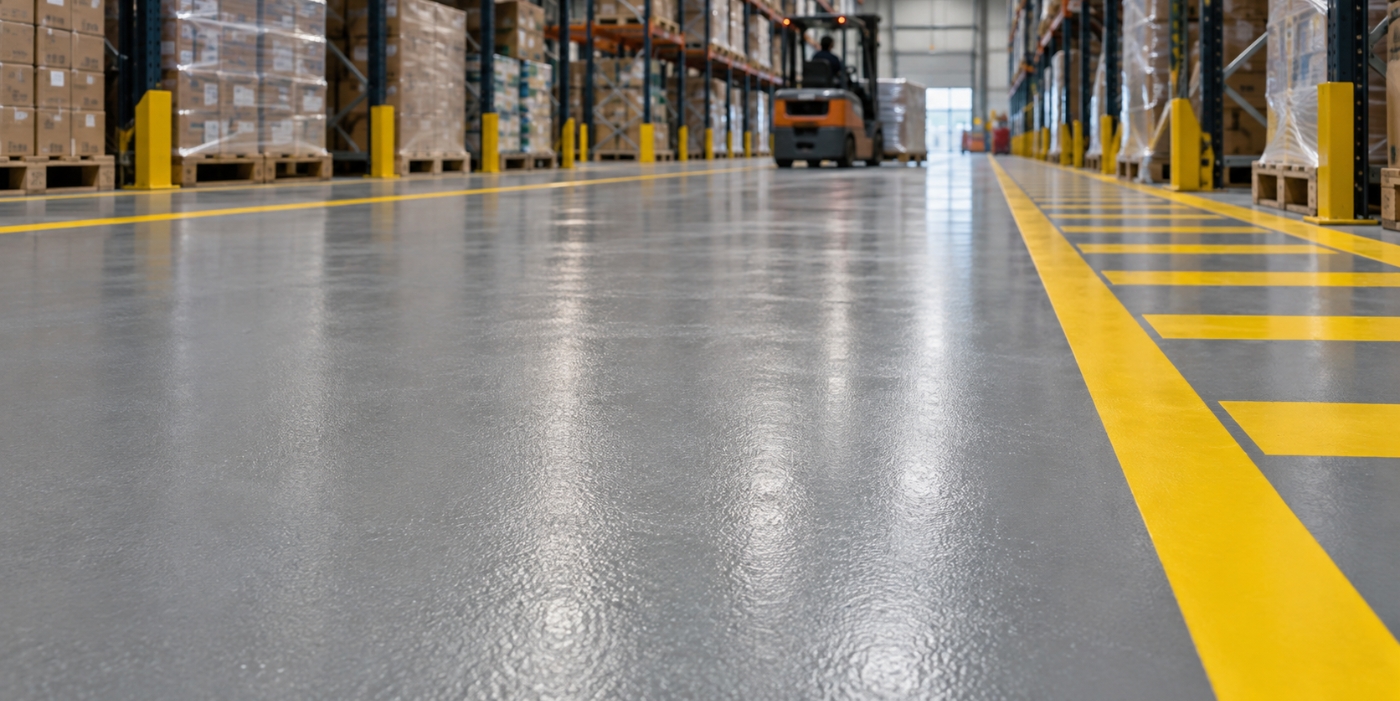
Warehouse flooring in Los Angeles takes a beating that office and retail floors never see: forklifts running the same aisles hundreds of times a day, pallet jacks dragging loaded skids across the same few feet of concrete, and the occasional spilled drum of oil, solvent, or cleaning chemical that soaks straight into untreated concrete if nobody catches it fast enough. Bare concrete was never built to handle that kind of continuous load, and it shows within a year or two as dusting, cracking, and pitting that slows down operations and creates safety hazards.
Allied Coatings installs commercial epoxy flooring systems for warehouses, distribution centers, and manufacturing facilities across Los Angeles County, using 100 percent solids epoxy formulations built specifically for the loads and chemical exposure industrial floors deal with every day. A warehouse manager who resurfaces a deteriorating floor before it fails outright typically spends a fraction of what it costs to deal with forklift downtime, product damage from spills, or an injury claim tied to a cracked or slippery floor.
Why Warehouse Concrete Fails
Concrete is a porous material, and a warehouse floor without a protective coating absorbs oil, hydraulic fluid, and cleaning chemicals directly into the slab. Over time, that absorption weakens the surface, and repeated wheel loads from forklifts and pallet jacks start to spall and crack the top layer, exposing aggregate and creating uneven spots that catch wheels and feet alike.
Slips, trips, and falls remain the second-most common cause of workplace injury nationally, contributing to close to 700 workplace fatalities a year, and a warehouse floor with oil residue, dust, or surface pitting is exactly the kind of surface where those incidents happen. A coated, seamless floor removes the porous surface that lets contaminants sit on top instead of soaking in, which makes cleanup faster and the surface itself more predictable underfoot.
What Industrial Epoxy Flooring Delivers
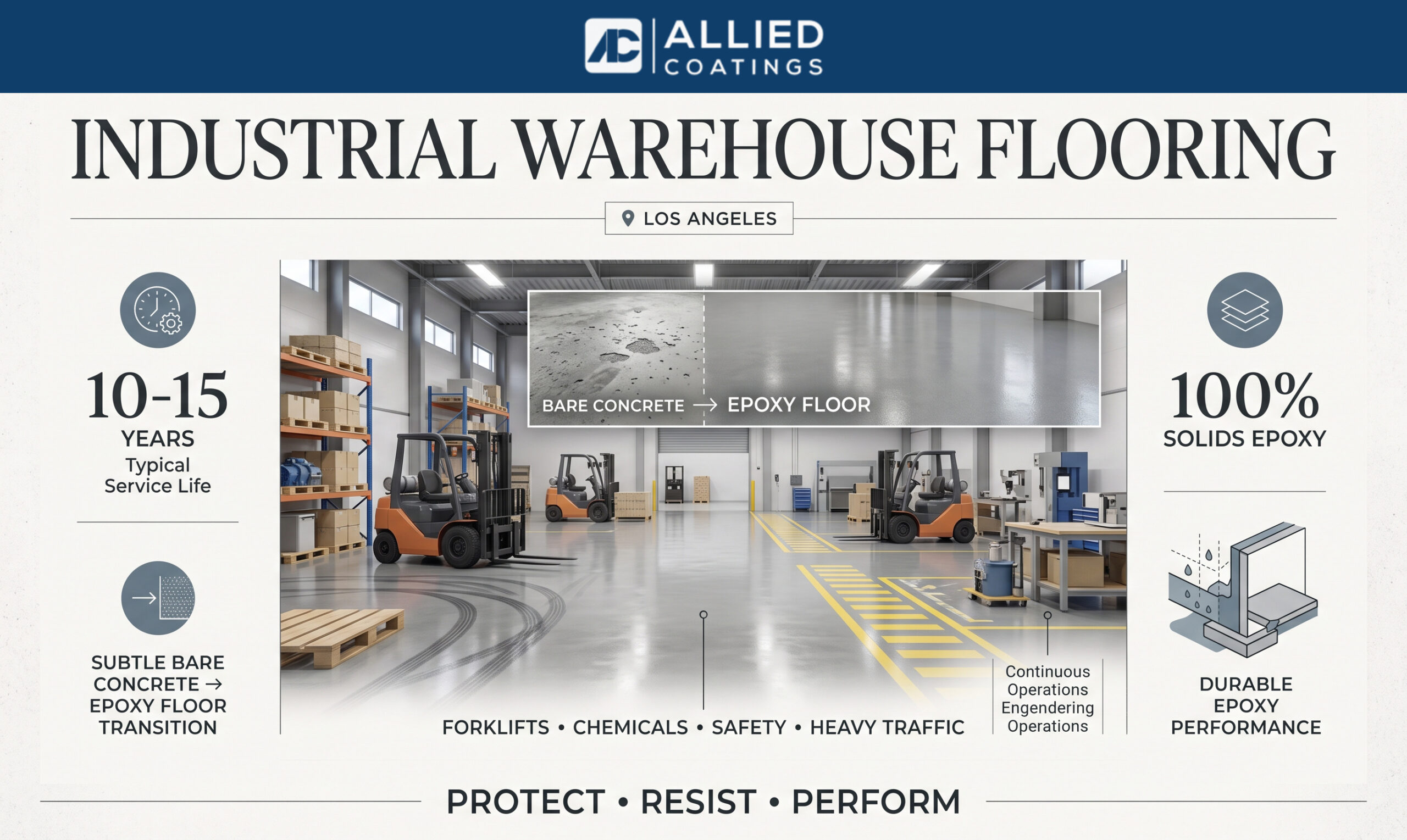
A 100 percent solids epoxy system creates a seamless surface bonded directly to the concrete slab, with no grout lines or seams where liquids, dust, or bacteria can collect. That seamless quality is a large part of why epoxy holds up in industrial settings better than tile, sealed concrete, or painted floors.
Chemical and Impact Resistance
Properly installed epoxy resists oil, gasoline, cleaning agents, and bleach, all common in warehouse and light industrial environments. Spills sit on the surface long enough to be cleaned up rather than staining or weakening the slab underneath, and the coating itself absorbs impact from dropped pallets and equipment without cracking the way exposed concrete does.
Safety Color Coding
Facilities running formal safety programs use color-coded flooring to mark aisles, pedestrian walkways, equipment zones, and hazard areas without relying on paint that wears off within months. Allied Coatings installs epoxy in safety red, yellow, blue, and green alongside standard finishes, so aisle marking and zone identification are built into the floor itself rather than repainted every quarter.
Installation Over Existing Concrete
Most warehouse epoxy projects go directly over the existing slab after proper surface preparation, which means facilities don’t need to remove and repour concrete to get a durable new floor. That keeps project timelines shorter and costs lower than a full slab replacement.
Industries Running on Epoxy Floors
Warehouses and distribution centers make up the bulk of Allied Coatings’ industrial epoxy work in Los Angeles, but the same systems show up across a range of facility types with similar demands.
- Manufacturing plants, where consistent chemical and impact resistance matters as much as safety marking around machinery.
- Automotive service bays, which need surfaces that shrug off oil, brake fluid, and constant vehicle traffic.
- Airplane hangars, where large open floor areas need a seamless, high-gloss finish that also holds up to fuel and hydraulic fluid exposure.
- Commercial kitchens, where food safety standards require a non-porous, easy-to-sanitize surface.
- Showrooms, where the same durability comes with a high-gloss finish suited to product display.
Keeping a Warehouse Floor Compliant and Safe
“Compliant” in a warehouse setting usually comes down to two things: a walking surface that meets basic slip-resistance expectations, and clear visual marking for aisles, equipment zones, and hazards. Epoxy systems support both. Slip-resistant additives can be broadcast into the topcoat in high-traffic or wet areas, and the same coating that resists chemical staining also holds safety-color striping far longer than painted lines, which tend to wear through within months under forklift traffic.
None of that requires shutting a warehouse down for weeks. Allied Coatings schedules industrial flooring projects in sections wherever possible, so distribution centers and manufacturing floors can keep moving product while the work is completed.
What Affects the Cost of Warehouse Flooring in Los Angeles
Square footage is the obvious starting point for pricing a warehouse floor, but the condition of the existing slab usually matters more. A floor with years of oil saturation, cracking, or previous failed coatings needs more extensive grinding and repair before a new system can bond properly, which adds labor and material cost that a newer, cleaner slab wouldn’t require.
The coating system itself is the other major variable. A basic solid-color industrial coating costs less than a system with safety color coding, quartz broadcast for slip resistance, or specialty chemical-resistant topcoats for facilities handling aggressive solvents. Facilities that know their specific chemical exposure and traffic patterns upfront tend to get more accurate quotes, since that information determines which system fits the space instead of defaulting to a generic one.
Allied Coatings walks each facility before quoting, since square footage alone doesn’t capture what a given warehouse floor needs.
If your warehouse floor is cracking, staining, or overdue for safety re-marking, Allied Coatings provides free estimates for industrial epoxy flooring throughout Los Angeles County. Call (800) 630-2375 or email sales@alliedcoatings.com to schedule a facility walkthrough.
Why Los Angeles Facilities Choose Allied Coatings
Allied Coatings brings more than 40 combined years of experience installing commercial and industrial flooring systems across Los Angeles, Orange, and San Diego Counties. Every project is scoped around the facility’s actual traffic patterns, chemical exposure, and safety requirements rather than a one-size-fits-all coating, which is why warehouse operators come back for recoating and expansion projects years after the original installation.
FAQs
How long does industrial epoxy flooring last in a warehouse?
Properly installed epoxy flooring in a warehouse setting typically lasts 10 to 15 years under heavy forklift and pallet jack traffic before recoating is needed, and considerably longer in lighter-use areas. Recoating an existing epoxy floor is generally faster and less expensive than the original installation.
Can epoxy flooring be installed without shutting down operations?
Most warehouse projects are staged in sections, allowing operations to continue in unaffected areas while each section cures. Full facility shutdowns are typically only needed for smaller warehouses without room to phase the work.
What makes epoxy better than sealed or painted concrete for a warehouse?
Epoxy forms a seamless, chemical-resistant surface bonded directly to the slab, while sealers and paints sit on top of the concrete and wear through under forklift traffic within a year or two. Epoxy’s resistance to oil, gasoline, and cleaning chemicals also prevents the staining and surface breakdown that untreated or painted concrete experiences.
Does colored or safety-marked epoxy cost more than a standard finish?
Safety color coding and aisle marking add modestly to material cost but are typically built into the same installation as the base coating, since the color is part of the topcoat itself rather than a separate paint application. Most facilities find the added upfront cost offsets years of repainting faded aisle lines.
How much does warehouse epoxy flooring cost in Los Angeles?
Cost depends on square footage, existing slab condition, and the specific system chosen, since heavier chemical exposure or safety marking requirements call for different formulations. Allied Coatings provides a written estimate after assessing the facility’s floor condition and operational needs.
Are slips, trips, and falls a significant risk in warehouses?
Yes. Slips, trips, and falls are the second-most common cause of workplace injury nationally and contribute to nearly 700 workplace fatalities each year, and warehouse floors with oil residue, dust, or surface damage are a common contributing factor. A seamless, properly maintained epoxy floor removes much of that risk by keeping contaminants on the surface where they can be cleaned up.