
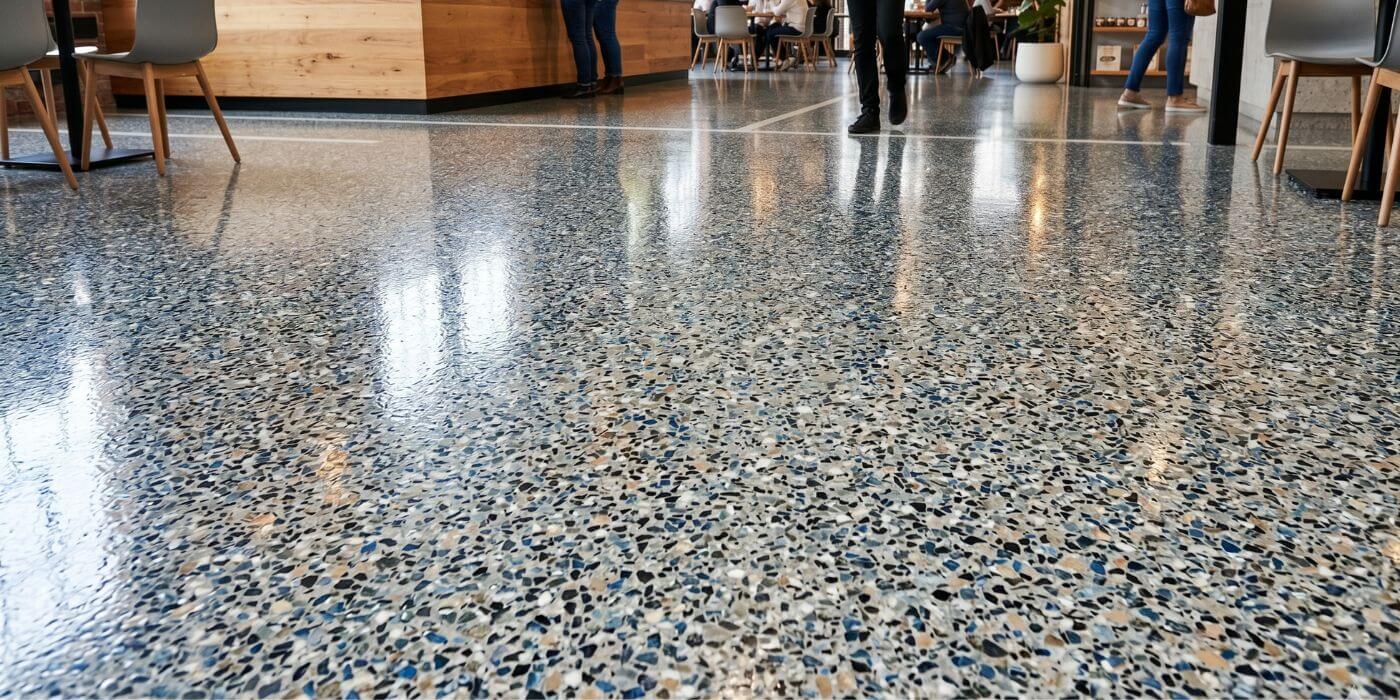
Epoxy flooring San Diego commercial facilities depend on has one job: hold up under real operating conditions without demanding constant attention. Whether the floor sees forklifts in a distribution warehouse, chemical washdowns in a commercial kitchen, or daily foot traffic in a medical facility, a system that was not installed correctly will fail and cost significantly more to repair than to install right the first time.
Allied Coatings has been installing commercial and industrial epoxy systems across San Diego County for over 40 years. Allied Coatings floors are built on 100% solids epoxy applied over mechanically prepared concrete, using commercial-grade materials sourced through approved installer programs with manufacturers including Sika, Kemiko, Tremco, Ardex, and Tennant. Request a free estimate to get a specific assessment of your space and conditions.
Why 100% Solids Epoxy Is the Commercial Standard
Not all epoxy products perform the same way under commercial conditions. Consumer-grade coatings contain solvents that evaporate during cure, which means the finished coating is thinner and less dense than what was applied. 100% solids epoxy contains no solvents. It cures into the full thickness applied, bonds mechanically to the concrete substrate, and produces a non-porous surface that resists oil, gasoline, bleach, and most industrial chemicals.
The absence of solvents also means the cured coating does not shrink. In San Diego warehouses where interior temperatures swing between coastal morning humidity and summer afternoon heat, a coating that shrinks during cure develops stress points that lead to cracking or delamination over time. A 100% solids system eliminates that failure mode from the start.
Allied Coatings installs commercial epoxy systems for showrooms, warehouses, airplane hangars, auto service bays, commercial kitchens, and animal hospitals across San Diego County. Each system incorporates high-performance acrylic admixtures, proprietary cement and aggregate blends, and commercial-grade sealers matched to the specific demands of each application type.
Surface Preparation: Where Commercial Installations Succeed or Fail
The single variable that separates a floor lasting 10 to 20 years from one that delaminates within 12 months is surface preparation. Epoxy applied to concrete that has not been mechanically opened bonds to the surface layer, not the substrate. That surface layer, whether it carries curing compounds, old sealers, oil contamination, or the laitance that forms on poured slabs, will eventually release and take the coating with it.
Diamond grinding opens the concrete’s pore structure so the epoxy can penetrate and form a mechanical bond rather than a surface-level adhesion. Cracks and damaged areas need to be repaired before coating begins, not filled with epoxy after the fact. A crack that is patched cosmetically without addressing what is happening below it will reflect through the new coating within months.
Allied Coatings addresses substrate conditions before any product goes down. The process includes assessment of existing slab conditions, crack repair, and mechanical preparation appropriate to the specific system being installed, whether that is a standard commercial epoxy, a quartz broadcast system, or a metallic finish for a showroom environment.
Epoxy System Options for San Diego Commercial Facilities
Different commercial environments call for different system configurations. Understanding the basic categories helps facility managers and contractors specify the right scope before work begins.
100% solids solid-color epoxy is the standard specification for warehouses, manufacturing floors, auto service bays, and light industrial facilities. It provides chemical resistance, impact tolerance, and a cleanable surface without unnecessary complexity. Allied Coatings offers this system in safety colors including red, yellow, blue, and green, which is relevant for facilities that need OSHA-compliant floor marking for work zones and walkways.
Quartz broadcast systems are appropriate for commercial kitchens, laboratories, and pharmaceutical facilities where the floor needs both chemical resistance and reliable slip resistance in wet conditions. The broadcast quartz aggregate creates a textured surface profile that holds traction even under active washdown.
Acrylic chip and flake systems are common in showrooms, retail environments, and multi-use commercial spaces where appearance is part of the specification. The chip layer adds visual depth and texture while a clear topcoat protects the system from wear and UV exposure. Allied Coatings carries an extensive range of acrylic chip blends suited to both functional and decorative commercial applications.
Metallic epoxy is used where the floor is part of the visual presentation, such as car dealerships, fitness studios, and hospitality spaces. It requires careful application technique and should be topcoated for long-term protection in high-traffic environments.
San Diego Site Conditions That Affect Epoxy Performance
San Diego’s climate is generally mild but creates specific installation conditions that matter for long-term performance. Coastal areas from Point Loma to La Jolla carry elevated ambient humidity and salt air, both of which affect moisture vapor transmission through concrete slabs. A floor installed without a moisture vapor barrier on a slab that requires one will delaminate over time regardless of product quality or application technique.
Inland San Diego areas including El Cajon, Santee, and Escondido regularly see summer temperatures above 90 degrees Fahrenheit. Epoxy applied in direct sun or on concrete that has been sitting in heat will cure unevenly, affecting both bond strength and surface appearance. Experienced contractors account for these conditions in their scheduling and application approach.
San Diego also sits in a seismically active region. Concrete slabs in older commercial buildings may carry existing crack patterns that require mechanical repair before coating. Coating over active or unaddressed cracking transfers the failure point directly to the new system.
What to Expect from a Commercial Epoxy Installation
Most commercial epoxy installations complete in one to three days. Surface preparation, including grinding and crack repair, is completed first and the slab must reach appropriate moisture levels before coating begins. High-traffic facilities typically schedule installation over a weekend to avoid operational disruption.
The cure schedule matters. A 100% solids epoxy system is typically ready for foot traffic within 24 hours and vehicle traffic within 72 hours, though full cure to maximum hardness takes longer. Coating a floor before full cure and then putting it under load compresses the film and can cause surface damage that is difficult to repair without recoating.
Allied Coatings works with commercial contractors managing single and multi-building properties across Southern California. With experience handling ongoing, multi-site commercial relationships, we can manage volume and scheduling requirements that a smaller residential-focused operation cannot. Contact Allied Coatings directly to review what your floor actually needs.
Frequently Asked Questions
How long does commercial epoxy flooring last in San Diego?
A properly installed 100% solids epoxy system over mechanically prepared concrete typically lasts 10 to 20 years in commercial environments, depending on traffic volume, chemical exposure, and maintenance practices. Coastal San Diego facilities that skip moisture vapor barrier treatment on slabs requiring it will see premature delamination regardless of the product used.
What surface preparation is required before commercial epoxy installation?
Diamond grinding is the standard preparation method for commercial epoxy installations. It mechanically opens the concrete surface for proper bonding and removes contaminants, curing compounds, and failed previous coatings. Crack repair and moisture testing should also be completed before any product is applied.
Can epoxy flooring be installed over an existing coating?
In most cases, the existing coating should be mechanically removed before a new system goes down. Installing over a failing coating transfers the failure to the new system. Whether the existing coating can stay depends on its adhesion, condition, and compatibility with the new product, which requires an on-site evaluation to determine accurately.
Does San Diego’s coastal humidity affect epoxy flooring installations?
Yes. Moisture vapor transmission through concrete is elevated in coastal San Diego areas. Contractors should test slab moisture levels before installation and apply a moisture vapor barrier where readings exceed product thresholds. This step is one of the most commonly skipped in the market and one of the most common causes of premature coating failure.
What is the difference between epoxy and polyaspartic flooring?
Polyaspartic is a fast-curing topcoat typically applied over an epoxy base coat as a UV-stable, wear-resistant finish layer. It is not a standalone replacement for the epoxy base in heavy commercial use. Some contractors apply polyaspartic as a single-product system for speed, but a base-plus-topcoat system generally outperforms a single-layer application under sustained commercial conditions.