
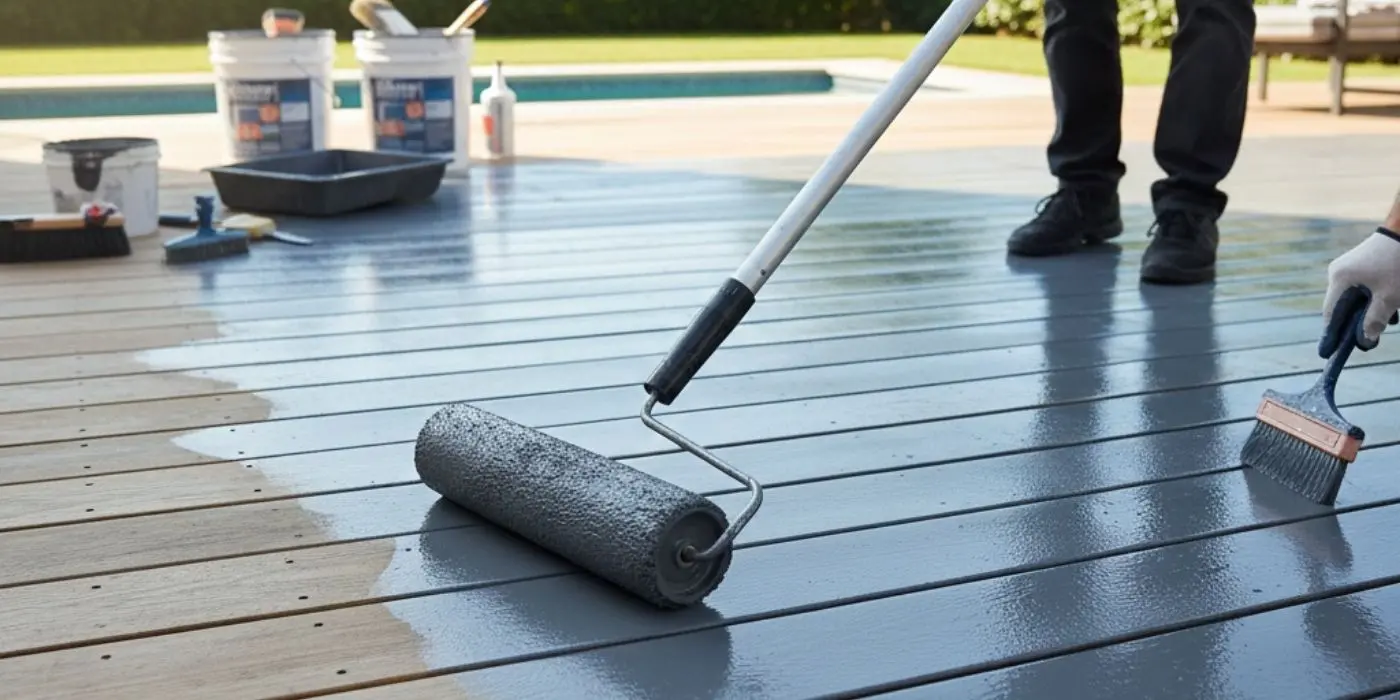
Los Angeles homeowners and property managers understand the unique challenges of protecting outdoor living spaces from water damage. With occasional heavy rains, morning dew, and the structural demands of multi-level buildings, deck waterproofing has become essential for maintaining property value and ensuring safety.
Allied Coatings has been Southern California’s trusted partner for deck waterproofing solutions. Serving Los Angeles, Orange County, and San Diego, their experienced team specializes in both residential and commercial waterproof decking systems that combine durability with aesthetic appeal.
From apartment balconies to expansive roof decks, Allied Coatings delivers high-performance protection that stands up to the demands of California’s climate while enhancing the beauty of your outdoor spaces.
Why Deck Waterproofing Is Critical in Los Angeles
Los Angeles presents unique waterproofing challenges due to its varied microclimates and regulatory requirements. Coastal neighborhoods like Santa Monica and Venice experience persistent marine layer moisture and salt-air corrosion, while inland areas such as the San Fernando Valley face extreme heat that accelerates membrane breakdown and expansion-related cracking.
Homes in the Hollywood Hills and other elevated areas often struggle with drainage issues caused by steep slopes and complex structural layouts. Additionally, the Los Angeles Building Code (LABC) outlines specific standards for deck slope, flashing, and waterproof membrane performance to prevent water intrusion into occupied spaces.
Property owners must also comply with California’s SB 326 and SB 721 balcony inspection laws, which have made proactive waterproofing essential for avoiding costly violations.
| Waterproofing System | Best Applications | Expected Lifespan* | Strengths in LA Climate | Limitations | Ideal For |
| Polyurethane (PU) Coatings | Balconies, roof decks, walkways | 10–15 years | Excellent UV resistance, high elasticity for thermal movement, seamless membrane | Requires expert surface prep; higher upfront cost | Residential balconies, apartment walkways, commercial decks |
| Hybrid Polyurethane / Polyurea | High-traffic decks, commercial roof decks | 12–20 years | Fast cure times, superior crack-bridging, strong abrasion resistance | Short working time requires experienced installers | Commercial buildings, restaurants, multi-family housing |
| Cementitious Waterproofing | Concrete decks, parking podiums | 8–12 years | Strong adhesion to concrete, breathable, good under tile or pavers | Limited flexibility; not ideal for high movement | Concrete slabs, podium decks |
| Acrylic Deck Coatings | Light-use balconies, patios | 5–10 years | Cost-effective, decorative finishes, UV stable | Less durable under heavy traffic or standing water | Residential patios, low-traffic balconies |
| Sheet Membrane Systems | Roof decks, large commercial projects | 15–25 years | Consistent thickness, excellent waterproof barrier, long-term durability | More complex installation, higher labor costs | Large roof decks, new construction |
| Waterproof Paver Systems (Pedestal) | Luxury roof decks | 20+ years | Allows drainage below surface, easy access for repairs | Higher system cost; structural requirements | High-end residential and commercial rooftops |
Benefits of Professional Waterproof Decking
Long-Term Cost Savings
Investing in professional deck waterproofing delivers substantial financial benefits over time. While the initial cost may seem significant, proper waterproofing prevents far more expensive repairs down the road.
Research on waterproof membrane systems demonstrates how quality waterproofing preserves structural integrity and prevents crack propagation under load, protecting the deck substrate from deterioration.
Professional waterproofing systems also increase property value and appeal. Prospective buyers and tenants view well-maintained outdoor spaces as valuable amenities, and documented waterproofing provides peace of mind about the property’s condition.
Enhanced Safety and Usability
Waterproof decking enhances safety and usability. Slip-resistant coatings, like rubberized or polyurethane-based systems, reduce fall risks even when wet—ideal for pool decks and high-traffic areas.
Proper waterproofing also prevents structural weakening, protecting against potential deck collapse.
Beyond safety, professionally waterproofed decks are simply more enjoyable to use. You don’t have to worry about furniture sitting in puddles, children playing on damp surfaces, or canceling outdoor gatherings due to lingering moisture.
Well-designed waterproofing systems include effective drainage that quickly clears water from the deck surface, allowing you to use your outdoor space shortly after rain rather than waiting days for it to dry.
Choosing the Right Waterproofing System for Your Project
Residential Balcony Waterproofing
Residential balconies present unique waterproofing challenges due to their size, location, and aesthetic requirements. Homeowners want durable protection that complements their home’s architecture and provides a comfortable outdoor living space. The ideal residential waterproofing system balances performance with appearance, offering color and texture options that match the home’s design while delivering reliable moisture protection.
Homeowners looking for a long-term solution often turn to residential waterproof decking coating systems that combine reliable protection with design flexibility for everyday outdoor living.
Commercial Roof Deck Solutions
Commercial roof decks serve multiple purposes—tenant amenities, rooftop dining areas, or building access—and require heavy-duty waterproofing systems designed for high traffic and commercial use. These applications demand coatings with superior durability, faster installation to minimize business disruption, and compliance with commercial building codes and ADA accessibility requirements.
Large commercial projects also benefit from waterproofing systems that offer easy maintenance and repair. Restaurant patios and apartment complex amenity decks see constant use and occasional damage from furniture, equipment, and heavy foot traffic. Professional-grade waterproofing systems for commercial applications include warranties covering both materials and labor, providing property owners with long-term protection and predictable maintenance costs.
Understanding Different Types of Deck Waterproofing Systems
Above-Grade Waterproofing Solutions
Above-grade waterproofing protects elevated decks, balconies, and roof terraces by directing water away from living spaces. Multiple layers—including a waterproof membrane, drainage, and wear surface—create a barrier that keeps the deck functional and durable.
We offer finishes to suit any style: textured slip-resistant coatings, smooth contemporary surfaces, or decorative stone- or wood-like options.
Above-Grade designed to expand and contract with temperature changes, preventing cracks and failures common in traditional methods.
Below-Grade Waterproofing Applications
Below-grade waterproofing protects underground structures like basements, foundation slabs, and sunken patios from soil and groundwater pressure. Systems use drainage boards, sump pumps, and specialized membranes to handle heavy moisture loads.
Effective below-grade waterproofing combines grading, perimeter drains, and waterproof coatings. Proper installation keeps basements dry, prevents foundation damage, and preserves structural integrity.
Signs Your Deck Needs Waterproofing
Visible Water Damage and Deterioration
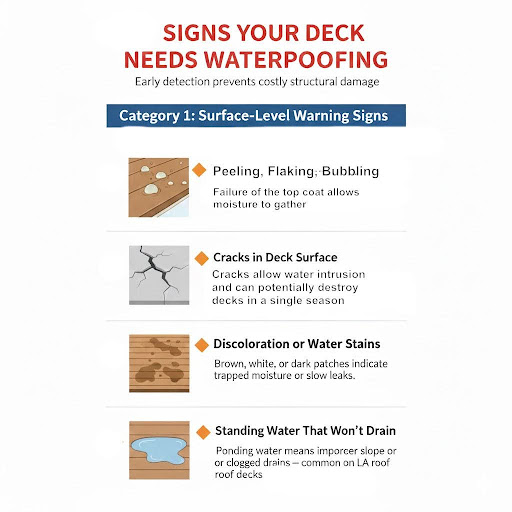
Early detection of waterproofing issues can save thousands in repairs. Signs include peeling paint, water stains, cracks, and standing water that won’t drain. Soft spots, rusted metal, and musty odors indicate deeper water damage. Ignoring these can lead to rot, mold, and full structural failure.
Age and Maintenance History
Even without visible damage, older decks may need attention based on age and maintenance. Most systems last 10–15 years, depending on materials, installation, and exposure. If your deck hasn’t been inspected or resealed recently, schedule an evaluation.
Los Angeles decks face harsh conditions—intense UV, temperature swings, and occasional heavy rain—that gradually degrade waterproofing. Regular maintenance and timely recoating extend deck life and prevent costly repairs.
The Deck Waterproofing Process
Surface Preparation and Repair
Successful waterproofing starts with thorough surface preparation. Contractors remove old coatings, clean the substrate, and repair damage—patching cracks, replacing wood, or grinding concrete—to ensure proper adhesion. Skipping this step often causes premature failure.
After repairs, the surface must be clean, dry, and primed. Moisture testing prevents trapped water that can cause delamination. Professionals use primers to ensure a strong bond between the substrate and waterproofing membrane.
Membrane Installation and Top Coating
The waterproof membrane forms the core barrier against water. It can be a liquid-applied or sheet membrane, or a combination, with modern polyurethane and hybrid systems providing strong adhesion, elasticity, and load-bearing capacity. Proper installation ensures coverage at corners, edges, and penetrations.
After the membrane is installed and fully cured, a protective top coat or wear surface is applied. This layer shields the waterproof membrane from UV damage, foot traffic, and physical wear while providing the desired aesthetic finish. High-quality membranes with strong UV resistance protect the deck surface from sun-induced degradation, fading, and cracking—especially critical in sunny climates like Los Angeles.
Maintaining Your Waterproof Deck
Regular Inspection and Cleaning
Even the best waterproofing systems require regular maintenance to achieve their full lifespan. Schedule professional inspections at least once a year to identify minor issues before they become major problems. During inspections, contractors check for cracks, assess drainage performance, examine flashing and transitions, and evaluate the overall condition of the waterproof coating.
Routine cleaning also plays a crucial role in waterproofing longevity. Remove leaves, debris, and dirt that can trap moisture against the deck surface.
Use mild detergents and avoid harsh chemicals or pressure washers that might damage the waterproof coating.
Keep drainage systems clear—clogged drains cause water pooling that accelerates wear and increases the risk of water finding its way into vulnerable areas.
Timely Repairs and Recoating
Address any damage to your waterproof deck immediately rather than waiting for annual inspections. Small cracks or worn areas that are quickly repaired prevent water infiltration and the cascading damage it causes. Many professional waterproofing contractors offer maintenance programs that include periodic inspections and prompt repair services, ensuring your system stays in optimal condition.
Ready to Protect Your Los Angeles Deck?
Don’t wait for water damage to compromise your property’s value and safety. Allied Coatings brings over 25 years of waterproofing expertise to every project in Los Angeles, Orange, and San Diego. Their experienced team specializes in both residential waterproofing coating as well as industrial and commercial waterproof systems, delivering solutions that combine lasting protection with beautiful finishes.
Contact Allied Coatings today for a free estimate on your deck waterproofing project. Book online or call (800) 630-2375 to schedule a consultation today.
Visit our Vista showroom at 795 North Ave. #D, Vista, CA 92083, or explore project examples in the Allied Coatings gallery. With Allied Coatings, you’re choosing proven quality, professional installation, and the peace of mind that comes with working with Southern California’s trusted waterproofing specialists.
FAQs
Q: What waterproofing system lasts the longest in Los Angeles?
Sheet membrane and hybrid polyurethane systems typically offer the longest lifespan—often 15 to 25 years—when properly installed and maintained. Their durability makes them ideal for roof decks and commercial properties exposed to heavy foot traffic and intense sun. According to the International Institute of Building Enclosure Consultants, properly installed sheet membranes can exceed their warranty periods by 40-60% in Mediterranean climates like LA’s. Learn more about our long-lasting waterproofing solutions.
Q: Which deck waterproofing system performs best in coastal areas like Santa Monica or Venice?
Coastal decks benefit most from polyurethane or hybrid systems because they resist UV damage, salt-air corrosion, and moisture intrusion. These systems remain flexible despite constant marine layer exposure and temperature fluctuations. The California Coastal Commission’s technical reports indicate that chloride penetration can reduce standard coating lifespans by up to 35%, making specialized marine-grade systems essential. Contact Allied Coatings for coastal-specific waterproofing recommendations.
Q: Can deck waterproofing help prevent cracks caused by earthquakes or soil movement?
Waterproofing doesn’t prevent structural movement, but elastic systems like polyurethane and polyurea coatings can bridge small cracks and accommodate movement without tearing. This flexibility helps protect decks from water intrusion following minor seismic activity common in Southern California. The Structural Engineers Association of California notes that flexible membrane systems can accommodate up to 300% elongation without failure.
Q: Is waterproofing required to pass SB 326 or SB 721 balcony inspections?
Waterproofing itself isn’t mandated, but failed or deteriorated waterproofing often leads to inspection violations. Inspectors look for water intrusion, dry rot, corrosion, and compromised load-bearing elements—all of which proper waterproofing helps prevent.
Updated, documented waterproofing systems significantly reduce the risk of non-compliance. Allied Coatings provides SB 326/721 compliant waterproofing with full documentation.
Q: What documentation is needed for balcony inspections?
California requires detailed records of waterproofing installation, materials used, and maintenance history. Professional contractors should provide manufacturer warranties, installation certifications, and compliance with local building codes. The California Department of Housing and Community Development emphasizes that proper documentation can expedite inspection approval and reduce liability.
Q: Can you waterproof over an existing deck surface?
Yes, in most cases, waterproofing can be applied over:
- Concrete (after proper surface preparation)
- Tile (following adhesion testing and primer application)
- Previously coated decks (if the existing system remains properly bonded)
However, surfaces with trapped moisture, rot, or delaminated coatings usually require removal before reapplication to avoid premature failure. Schedule a free assessment to determine if your deck is suitable for overlay application.
Q: How often should decks in Los Angeles be recoated?
Most systems benefit from a new top coat every 5–7 years. Recoating restores UV protection and wear resistance without removing the underlying waterproof membrane, significantly extending system life at a lower cost. The National Roofing Contractors Association recommends proactive recoating schedules to maximize membrane lifespan and prevent costly full replacements.
Q: Does deck waterproofing reduce heat buildup?
Yes. Many modern waterproofing systems include UV-reflective and cool-roof–rated top coats that reduce surface temperatures by 20-40°F. This is especially beneficial in inland areas like the San Fernando Valley, where decks can become dangerously hot in summer. Energy Star-rated reflective coatings can also contribute to LEED certification points for commercial properties.
Q: What are the most common causes of deck waterproofing failure in LA?
- Improper slope or drainage (minimum 1/4″ per foot required)
- Skipping moisture testing before installation
- Using interior-grade or non-UV-resistant coatings
- Incompatible layers between old and new systems
- DIY patch repairs over failing membranes
- Inadequate substrate preparation
The Building Enclosure Technology and Environment Council reports that 78% of waterproofing failures stem from installation errors rather than material defects. Allied Coatings’ certified installers follow strict protocols to prevent these common failures.
Q: How do you identify waterproofing failure early?
Warning signs include:
- Ponding water after 24-48 hours
- Visible cracks or bubbling in the coating
- Discoloration or staining on ceiling below
- Soft spots or spongy areas when walking
- Efflorescence (white mineral deposits) around edges
Early detection can often allow for localized repairs rather than full system replacement.
Q: Is deck waterproofing different for commercial properties?
Yes. Commercial decks require:
- Higher abrasion resistance (Class A traffic ratings)
- Faster cure times to minimize business disruption
- ADA-compliant slip resistance (minimum 0.6 wet coefficient of friction)
- Fire-rated systems meeting California Building Code requirements
- Documented warranties and maintenance programs
Residential systems typically prioritize aesthetics and comfort, while commercial systems focus on durability and compliance. Allied Coatings specializes in both residential and commercial waterproofing solutions.
Q: Can waterproofing improve property value?
Absolutely. Professionally waterproofed decks:
- Reduce future repair risk and insurance claims
- Increase usable outdoor space year-round
- Support compliance documentation for sales/transfers
- Appeal to buyers, tenants, and inspectors
- Can add 3-8% to property value according to National Association of Realtors studies
For rental and multi-family properties, this can directly impact occupancy rates and long-term asset value. Contact Allied Coatings for a property value assessment.
Q: Is deck waterproofing environmentally friendly?
Many modern systems now use low-VOC materials and long-life membranes that reduce material waste over time. Reflective coatings also help lower building cooling loads by 15-25%, supporting energy efficiency goals and potentially qualifying for utility rebates. The Cool Roof Rating Council certifies many waterproofing top coats for their environmental benefits.
Q: Are there green building certifications for waterproofing?
Yes. LEED, BREEAM, and California’s CALGreen program all recognize high-performance waterproofing systems that contribute to energy efficiency, durability, and indoor air quality. Points are typically awarded for reflective properties, longevity, and low-emission materials.